


There’s a particular kind of heartbreak that comes from watching your child slowly stop participating in their own life.
Maybe your son is 25 and spending most of the day drinking alone. Maybe he barely leaves his room anymore. Maybe every conversation turns into defensiveness, silence, or another promise that “things aren’t that bad.” You may find yourself lying awake at night replaying old memories, wondering where the energetic, funny, hopeful version of him went.
Parents often tell us the same thing:
“I don’t even recognize him anymore.”
And underneath that fear is another painful question many families are scared to say out loud:
“What if he never wants help?”
If you’re searching for answers, you are not failing your child by feeling overwhelmed. Families looking for treatment options in Baltimore, MD often reach out during this exact stage — before treatment, before clarity, and before anyone knows what happens next.
You do not need to have all the answers today. You just need a starting point.
Refusing Therapy Doesn’t Mean He’s Beyond Help
One of the hardest parts of loving someone with depression and alcohol misuse is realizing insight and action don’t always happen at the same time.
Your son may know something is wrong. He may even feel ashamed about how much he’s drinking. But depression has a way of shrinking a person’s world until even basic tasks feel exhausting. Adding alcohol into the mix often deepens that hopelessness.
From the outside, it can look like laziness or stubbornness.
Inside, it often feels more like:
- Emotional paralysis
- Shame
- Numbness
- Fear of change
- Fear of failure
- Fear that treatment won’t work
Many young adults also worry treatment means losing control of their life or identity. They imagine judgment, pressure, or being forced into a version of themselves they don’t recognize.
That fear keeps a lot of people stuck longer than families realize.
Depression and Drinking Can Create a Dangerous Routine
Alcohol and depression tend to feed each other in quiet ways.
Someone drinks because they feel depressed. Then the drinking worsens sleep, motivation, anxiety, and emotional regulation. Over time, the person starts drinking more often just to feel temporarily normal again.
The result can look like this:
- Sleeping late
- Drinking throughout the day
- Pulling away from friends
- Losing interest in hobbies
- Irritability or emotional shutdown
- Avoiding responsibilities
- Refusing conversations about help
The routine becomes predictable. So does the isolation.
Parents often describe the home starting to feel emotionally tense all the time — like everyone is waiting for the next mood swing, argument, or crisis.
And even though your son is an adult, your nervous system may still react like you’re trying to protect a child in danger.
That level of chronic stress can wear families down more than people realize.
You Don’t Have to Wait Until Things Become Catastrophic
A lot of families believe they need to wait for a “rock bottom” moment before treatment becomes possible.
That belief keeps people stuck.
You do not need:
- An arrest
- A DUI
- A hospitalization
- Job loss
- Public collapse
- A medical emergency
before asking for guidance.
Sometimes the most important intervention happens earlier — while there’s still emotional connection left to work with.
Early support can help families:
- Understand enabling versus support
- Improve communication
- Set healthy boundaries
- Learn how depression impacts behavior
- Respond without escalating conflict
- Explore treatment pathways calmly
In many situations, families searching for help for alcoholic son situations discover that the healthiest next step is not “forcing treatment,” but changing how everyone responds to the cycle.
That shift alone can open doors.
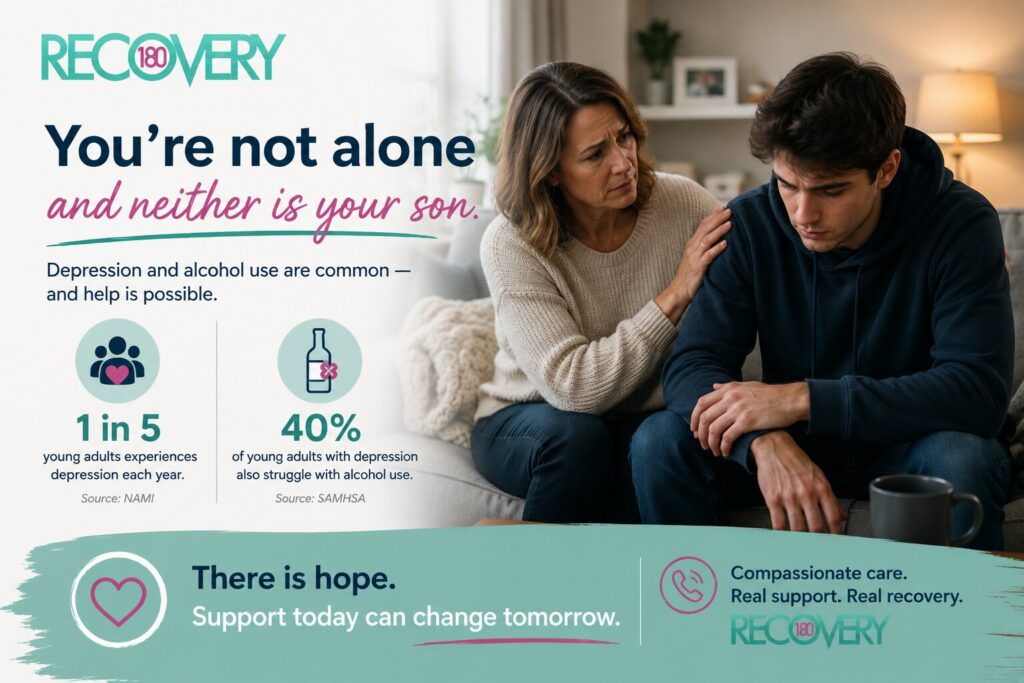
What You Can Actually Do Right Now
Parents often feel trapped between two painful choices:
- Push too hard and risk pushing him away
- Stay silent and feel like you’re enabling
The truth usually lives somewhere in the middle.
Focus on Connection Before Persuasion
If every conversation becomes about treatment, your son may start avoiding you entirely.
That doesn’t mean you ignore the problem. It means you create moments where he still feels human instead of constantly analyzed.
Simple statements can sometimes go further than lectures:
- “You seem exhausted lately.”
- “I miss spending time with you.”
- “I’m worried because this doesn’t seem sustainable.”
- “You don’t have to figure this out alone.”
The goal is not winning an argument. The goal is reducing shame enough that honest conversation becomes possible again.
Stop Protecting the Addiction From Consequences
Many loving parents unintentionally absorb the fallout of addiction because they’re trying to keep peace in the home.
That might look like:
- Covering bills
- Calling employers
- Cleaning up repeated crises
- Providing money that supports drinking
- Ignoring destructive behavior to avoid conflict
Boundaries are difficult because they can feel cruel at first. But boundaries are not punishment.
They are clarity.
Healthy boundaries communicate:
“I love you deeply. But I cannot organize my entire life around this illness.”
That distinction matters.
Get Support for Yourself Too
Families often become emotionally isolated while trying to manage someone else’s addiction.
You may feel:
- Constant anxiety
- Hypervigilance
- Exhaustion
- Anger followed by guilt
- Fear every time the phone rings
- Shame for resenting the situation
None of those feelings make you a bad parent.
Addiction and depression affect entire families, not just the individual struggling.
Speaking with professionals can help you regain perspective and emotional stability — even if your son refuses treatment right now.
Families exploring help in Elkridge, MD and surrounding communities often begin with these conversations first.
Treatment Resistance Is More Common Than People Think
One of the biggest misconceptions about recovery is that people enter treatment fully motivated and hopeful.
Many do not.
Some arrive:
- Angry
- Skeptical
- Emotionally shut down
- Convinced treatment won’t help
- Feeling pressured by family
And yet, recovery still happens every day.
We’ve seen young adults who initially refused therapy slowly begin opening up once they felt emotionally safe. Sometimes the breakthrough isn’t dramatic. Sometimes it’s simply someone admitting they’re tired of living the same painful day over and over.
Recovery rarely starts with confidence.
More often, it starts with exhaustion.
What Recovery Can Actually Look Like
Families sometimes expect recovery to happen like a movie montage — immediate insight, apologies, motivation, and transformation.
Real recovery is slower and more human than that.
At first, progress might look like:
- Sleeping through the night
- Eating consistently
- Showing up to conversations
- Going one day without drinking
- Laughing again
- Reconnecting with old interests
- Taking responsibility in small ways
Those moments may seem small from the outside. They are not small.
Healing often happens quietly before it becomes visible.
One parent once described it this way:
“It felt like watching color slowly come back into someone’s face.”
That’s what many families are truly hoping for. Not perfection. Not instant change. Just signs that the person they love is still in there somewhere.
There Is Still Hope Even if He Says No Today
A refusal today is not necessarily a refusal forever.
People change when pain, support, timing, and readiness finally intersect. Sometimes that happens after one conversation. Sometimes it takes many attempts.
What matters right now is keeping the door open without losing yourself in the process.
You are allowed to:
- Ask for guidance
- Set boundaries
- Protect your own mental health
- Stop carrying this alone
- Hope for change without forcing it
And you are allowed to believe your son is more than the worst season of his life.
If your family is exploring treatment options in Baltimore, MD, Recovery180 can help you understand what next steps may look like with compassionate, structured support.
Frequently Asked Questions
Can someone recover if they refuse therapy at first?
Yes. Many people enter treatment feeling resistant, uncertain, or emotionally shut down. Readiness often develops gradually after trust and safety are established.
Is drinking all day a sign of alcoholism?
Drinking throughout the day can be a serious warning sign, especially when combined with depression, isolation, emotional changes, or difficulty functioning normally.
What should I avoid saying to my adult son?
Try to avoid shaming, threatening, or labeling language. Statements like “You’re ruining your life” can increase defensiveness. Calm, supportive observations tend to create more productive conversations.
Can depression make someone avoid treatment?
Absolutely. Depression often creates hopelessness, low motivation, shame, and emotional exhaustion that make seeking help feel overwhelming.
Should I force my adult child into treatment?
Every situation is different, but forcing treatment is not always possible or effective. Families often benefit from speaking with professionals first to understand healthy boundaries and supportive next steps.
What if my son gets angry every time I bring it up?
That reaction is common. Many people struggling with alcohol use and depression feel cornered or ashamed during these conversations. Focusing on concern instead of confrontation may help lower defensiveness.
Is residential treatment only for severe cases?
Not necessarily. Live-in treatment can help people who need structure, emotional support, and distance from unhealthy routines or environments before things become even more dangerous.
How do I know if my family needs support too?
If your household feels emotionally consumed by your loved one’s drinking, support for family members may be just as important as support for the individual struggling.
Call (410) 584-3155 or visit our Baltimore location to learn more about our residential treatment program services in Baltimore.