


There’s a moment many parents never forget.
Your child finally says they’re going to stop taking pills. Maybe you feel relief for the first time in months. Maybe you think, “Okay, this is the turning point.”
Then the symptoms begin.
They can’t sleep. They’re sweating through sheets. They’re vomiting. They’re pacing the house at 2 a.m. They say their skin hurts. Their legs won’t stop moving. They look panicked, exhausted, angry, or completely emotionally shut down.
And suddenly, instead of relief, you feel terrified.
You start wondering:
“Is this normal?”
“Should we go to the hospital?”
“Are they in danger?”
“Did we wait too long?”
If this sounds familiar, you are not alone. Families searching for treatment options in Baltimore, MD often arrive during this exact stage — emotionally overwhelmed, physically exhausted, and trying desperately to figure out whether what they’re seeing is withdrawal.
And the truth is: it may be.
Withdrawal Can Feel Frightening for Everyone in the House
One of the hardest things for families to understand is that withdrawal is not simply someone “feeling sick.”
It can affect nearly every part of the body and nervous system at once.
When someone has been taking opioids or certain prescription pills regularly, the body adapts to their presence over time. Once the substance suddenly disappears, the nervous system struggles to regulate itself normally again.
That can create symptoms like:
- Sweating
- Vomiting
- Chills
- Muscle pain
- Diarrhea
- Restlessness
- Severe anxiety
- Panic
- Insomnia
- Rapid heart rate
- Intense cravings
Parents are often shocked by how physically intense withdrawal becomes.
A young adult who looked emotionally numb days earlier may suddenly appear frantic, miserable, or unable to sit still for more than a few minutes.
And because many families have never seen withdrawal before, it can feel deeply alarming.
Sleep Loss Can Make Everything Feel Worse
One symptom families frequently underestimate is insomnia.
People withdrawing from opioids or pain pills often struggle to sleep at all during the early stages. Even when they’re exhausted, their nervous system may feel overstimulated and unable to settle down.
Many people describe it like:
- Feeling trapped inside their own body
- Being unable to get comfortable no matter what they try
- Feeling exhausted but wired
- Having racing thoughts constantly
- Feeling emotionally raw and panicked at night
After several nights without meaningful sleep, emotions can become even harder to regulate.
This matters because sleep deprivation often increases:
- Anxiety
- Irritability
- Depression
- Hopelessness
- Cravings
- Impulsive decision-making
Sometimes families interpret this emotional volatility as manipulation or lack of motivation. In reality, the body and brain are under enormous stress during withdrawal.
Vomiting and Sweating Are Common — But Withdrawal Still Deserves Medical Attention
A dangerous myth many families hear is:
“They just have to tough it out.”
That mindset can delay important medical support.
While sweating and vomiting are common during opioid withdrawal, severe symptoms can become risky quickly — especially if dehydration, panic, underlying health conditions, or relapse risks are involved.
This is especially important if your child:
- Cannot keep fluids down
- Becomes confused or disoriented
- Has chest pain
- Experiences difficulty breathing
- Passes out
- Shows signs of severe dehydration
- Talks about self-harm
- Seems emotionally hopeless or detached
Withdrawal itself may not always be life-threatening, but complications absolutely can become serious.
And emotionally? Withdrawal can push people to an incredibly vulnerable place very quickly.
Why Many People Return to Pills During Withdrawal
This part matters because families often misunderstand relapse during detox.
A lot of parents assume:
“If they really wanted to quit, they’d push through.”
But withdrawal symptoms can become overwhelming physically, mentally, and emotionally. After days without sleep, while vomiting, sweating, aching, and panicking, many people become desperate for relief.
Not because they don’t care.
Not because they’re lazy.
Not because they’re trying to hurt anyone.
Because the nervous system is screaming for the substance it became dependent on.
That desperation can create an intense risk of relapse — especially when someone tries detoxing completely alone.
And after even a short period without opioids, tolerance changes. Returning to previous amounts can increase overdose risk significantly.
This is one reason professional opioid withdrawal help can be so important during early recovery.
Parents Often Carry More Fear Than They Admit
Parents living through this stage often become hyper-alert.
Listening for movement at night.
Checking breathing repeatedly.
Watching for mood shifts.
Panicking every time the bathroom door stays closed too long.
Some parents stop sleeping almost entirely themselves.
Others become emotionally frozen because they feel like they have to stay “strong” constantly.
And underneath all of it is usually grief.
Not just fear of losing your child — but grief over watching someone you love suffer in ways you cannot simply fix with comfort, advice, or protection anymore.
Many parents quietly ask themselves:
“How did we get here?”
That question carries so much guilt.
But addiction rarely develops because parents failed to love enough.
Most families are trying to navigate something incredibly complicated without a map.
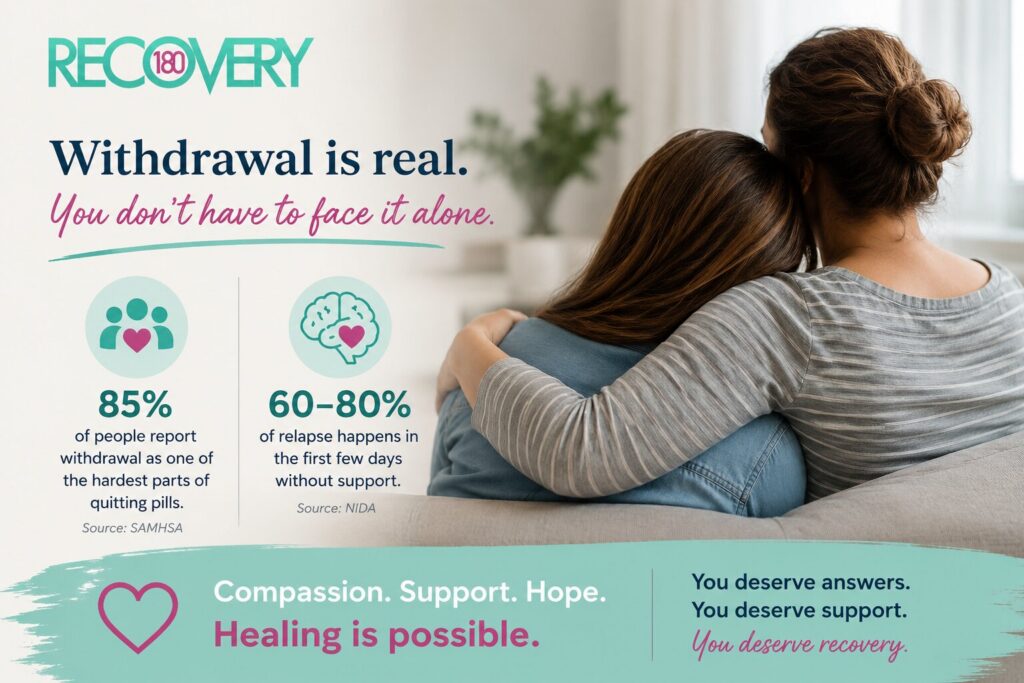
Withdrawal Does Not Mean Your Child Is Weak
People often feel ashamed by how hard withdrawal hits them.
A young adult may genuinely want recovery and still feel overwhelmed by:
- Cravings
- Fear
- Physical pain
- Panic
- Emotional collapse
- Exhaustion
Families sometimes mistake this distress for manipulation.
But dependence changes the body in very real ways. Withdrawal is not simply about “willpower.” It is neurological, physical, emotional, and psychological all at once.
That’s why compassionate support matters so much.
Not because someone is incapable of recovery.
Because recovery becomes much harder when someone feels terrified, ashamed, and physically overwhelmed at the same time.
Treatment Is Often About Stabilization First
Families sometimes imagine treatment as a dramatic emotional breakthrough.
In reality, early recovery is often much simpler at first.
It may begin with:
- Sleep
- Hydration
- Medical monitoring
- Emotional safety
- Nutrition
- Structure
- Reduced chaos
- Relief from constant crisis management
For many people, stabilization is the first real moment their nervous system has slowed down in a very long time.
And for families, support can mean finally stepping out of survival mode too.
Many parents searching for support in Elkridge, MD or nearby communities say the same thing afterward:
“I didn’t realize how scared we’d all been until things finally got calmer.”
That calm matters.
Recovery Usually Begins Smaller Than Families Expect
Movies often portray recovery as one dramatic moment where everything suddenly changes.
Real recovery is usually quieter.
At first, progress may look like:
- Sleeping for four hours straight
- Keeping food down
- Showering
- Sitting through a conversation
- Asking for help honestly
- Laughing briefly again
- Admitting fear instead of hiding it
Those moments are not small.
They are signs the person underneath the addiction is still there.
One parent once described early recovery this way:
“It felt like watching someone slowly come back into focus after years of static.”
That image stays with many families because addiction can feel exactly like that — like trying to reach someone through heavy fog.
You Do Not Have to Navigate This Alone
Parents often think they should already know what to do.
But most families facing addiction are learning in real time while emotionally overwhelmed.
You are allowed to:
- Ask questions
- Feel scared
- Need guidance
- Seek professional support
- Protect your own mental health too
And your child is allowed to need help getting through withdrawal safely.
If symptoms are escalating or your family feels overwhelmed, reaching out for guidance is not overreacting. Sometimes getting clarity is the first step toward everyone breathing again.
Frequently Asked Questions
Are sweating and vomiting normal after quitting pills?
They can be common symptoms of opioid or prescription pill withdrawal. However, severe symptoms should still be medically evaluated, especially if dehydration or confusion develops.
How long does withdrawal usually last?
Withdrawal timelines vary depending on the substance, length of use, dosage, and overall health. Some symptoms improve within several days, while others can last longer.
Is opioid withdrawal dangerous?
Withdrawal itself is often not fatal, but complications like dehydration, relapse, overdose risk, mental health crises, or co-occurring medical issues can become dangerous.
Why can’t my child sleep after stopping pills?
Withdrawal can overstimulate the nervous system, making it extremely difficult to rest even when someone feels exhausted.
Should someone detox at home?
That depends on the severity of symptoms, medical history, mental health concerns, and relapse risk. Professional support can help improve safety and comfort during withdrawal.
Why does my child seem emotionally all over the place?
Withdrawal affects the brain, emotions, stress response, and sleep patterns simultaneously. Mood swings, panic, irritability, and emotional distress are common.
What signs mean we should seek emergency help?
Seek urgent medical care if someone has chest pain, breathing problems, severe dehydration, confusion, loss of consciousness, seizures, or talks about self-harm.
Is relapse common during withdrawal?
Yes. Many people relapse during withdrawal because symptoms become physically and emotionally overwhelming, especially without support.
Can treatment help even if my child already tried quitting before?
Absolutely. Many people require multiple attempts, different levels of support, or medical stabilization before recovery begins to feel sustainable.
What if my child wants help one day and refuses it the next?
That emotional back-and-forth is extremely common during withdrawal and early recovery. Fear, physical discomfort, and cravings can shift motivation rapidly.
If your family is trying to understand withdrawal symptoms or explore next steps with compassionate support, Recovery180 can help guide you through the process with clarity and care.
Call (410) 584-3155 or visit our Baltimore location to learn more about our residential treatment program services in Baltimore.