


There is a moment many people experience before they ever call a treatment center.
It usually happens alone.
Maybe it’s after another difficult morning. Maybe it’s after a conversation with someone you care about. Maybe it’s after realizing that drinking has quietly become part of every day.
You sit down, open your phone, and start searching.
“Can I stop drinking at home?”
“Do I really need help?”
“What happens if I just quit tomorrow?”
If you’ve found yourself asking those questions, you’re not alone.
Many people become sober curious long before they become treatment seekers. They aren’t necessarily looking for rehab. They’re looking for information. They’re trying to understand whether they’re making this bigger than it is—or not taking it seriously enough.
One of the most common searches people make during this stage is alcohol detox near me because they want to know whether professional support is necessary or whether they can simply stop drinking on their own.
The answer depends on several factors.
And understanding those factors could make a significant difference in your safety and comfort.
If you’re beginning to explore your options, learning more about available addiction treatment services can help you understand what support may look like before making any decisions.
Step 1: Understand That Alcohol Withdrawal Is Different Than Most People Expect
Many people assume alcohol withdrawal works like giving up caffeine.
You feel uncomfortable for a few days.
You push through it.
Then you move on.
For some individuals, the experience may feel relatively manageable.
For others, alcohol withdrawal can become much more serious.
That’s because alcohol affects the central nervous system. Over time, the brain and body adapt to alcohol’s presence. When alcohol is suddenly removed, the body has to recalibrate.
That adjustment can create symptoms ranging from mild discomfort to medical emergencies.
This is why detox decisions should never be based on guesswork alone.
The goal isn’t proving you can handle it.
The goal is staying safe while giving yourself the best chance to succeed.
Step 2: Take an Honest Look at Your Drinking History
Before deciding whether home detox makes sense, it’s important to assess your situation honestly.
Ask yourself:
- How often do I drink?
- How much do I typically drink?
- How long has this pattern been going on?
- Have I experienced withdrawal symptoms before?
- Have I attempted to quit in the past?
- Do I drink to avoid feeling sick or shaky?
Many people minimize their alcohol use because it has become routine.
A few drinks every evening may not feel significant if it’s been happening for years.
But frequency matters.
Duration matters.
And previous withdrawal experiences matter.
Someone who drinks occasionally faces a different risk profile than someone who has consumed alcohol heavily every night for several years.
The more accurately you evaluate your drinking pattern, the easier it becomes to determine what level of support may be appropriate.
Step 3: Learn the Warning Signs Your Body May Already Be Giving You
One of the clearest indicators that alcohol has become physically significant is how your body responds when you don’t drink.
Some common withdrawal symptoms include:
- Anxiety
- Sweating
- Tremors or shaking
- Nausea
- Irritability
- Restlessness
- Difficulty sleeping
- Headaches
- Increased heart rate
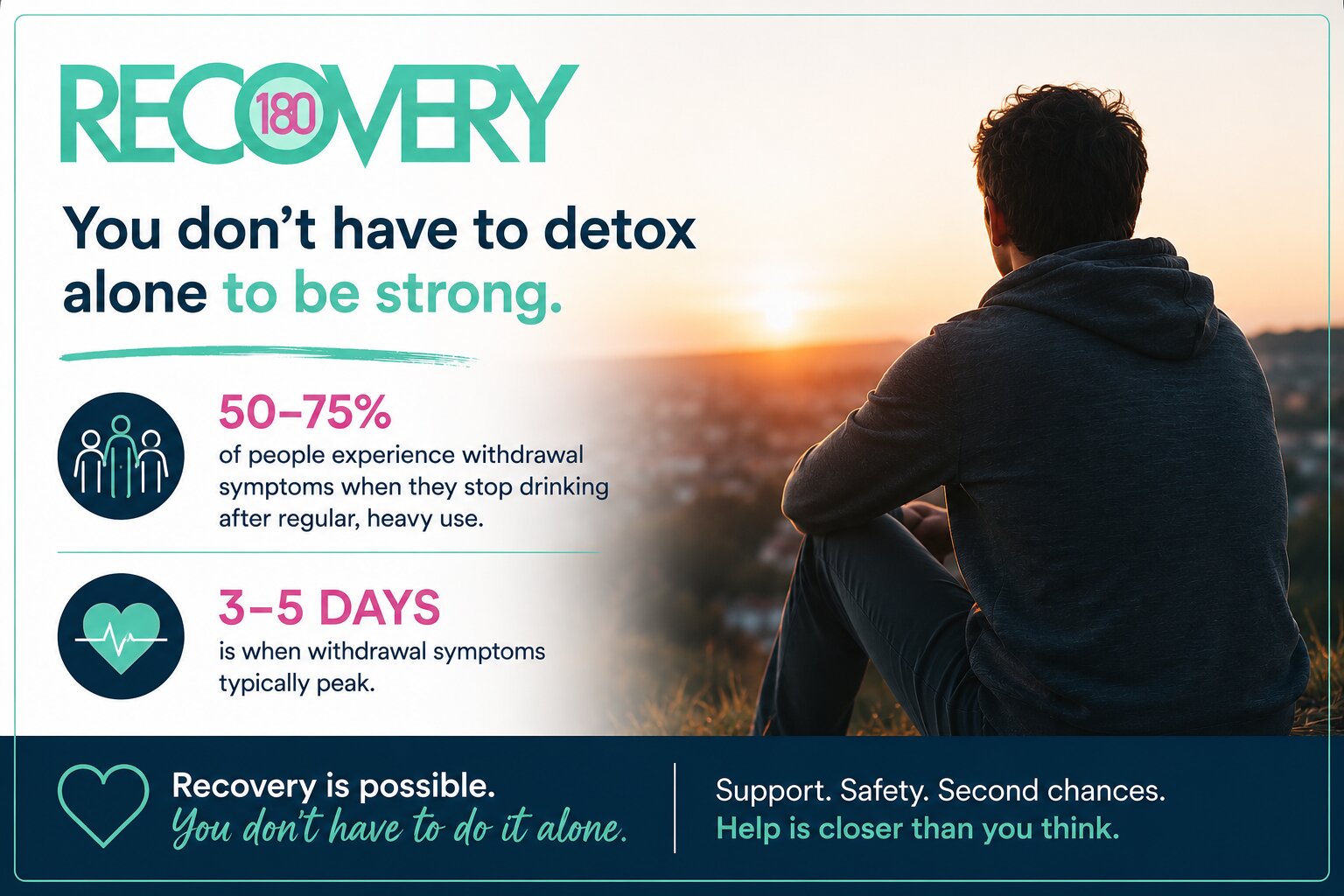
These symptoms can appear within hours after the last drink for some individuals.
What surprises many people is that they often mistake early withdrawal symptoms for stress, poor sleep, or a difficult day.
They don’t always realize alcohol may be contributing to the problem.
If you’ve ever skipped drinking and felt noticeably worse than expected, your body may already be providing valuable information about your relationship with alcohol.
Step 4: Know Why Home Detox Isn’t Always the Safer Option
There is a common belief that detoxing at home is the “strong” choice.
In reality, strength has very little to do with it.
Safety is what matters.
Some individuals can stop drinking with relatively mild symptoms.
Others may experience severe withdrawal complications that require immediate medical attention.
Potential risks can include:
- Seizures
- Hallucinations
- Severe confusion
- Dangerous blood pressure changes
- Delirium tremens (DTs)
The challenge is that it can be difficult to predict who will develop serious complications.
People sometimes assume that because they handled withdrawal once before, future attempts will be similar.
Unfortunately, alcohol withdrawal does not always follow predictable patterns.
That’s one reason many professionals encourage individuals to seek guidance before attempting detox on their own.
Step 5: Understand What Professional Detox Actually Looks Like
Many people avoid reaching out because they imagine the worst.
They picture hospitals.
Locked doors.
Loss of independence.
Months away from home.
The reality is often much different.
Professional detox focuses primarily on stabilization, monitoring, and support.
Medical teams help individuals navigate withdrawal as safely and comfortably as possible.
Instead of spending every hour wondering whether symptoms are becoming dangerous, people have trained professionals available to evaluate what they’re experiencing.
Many clients later describe an unexpected feeling during detox:
Relief.
Relief that they no longer had to figure everything out alone.
Relief that someone else understood what was happening.
Relief that they finally stopped carrying the entire burden themselves.
Step 6: Think About What Happens After Withdrawal Ends
One of the biggest misconceptions about recovery is that detox solves everything.
Detox is important.
But it’s only the first chapter.
Alcohol often becomes connected to routines, relationships, emotions, stress management, and daily habits.
When alcohol is removed, those challenges don’t automatically disappear.
Many people find that remaining alcohol-free becomes more difficult than physically stopping.
That’s why recovery planning matters.
Some individuals benefit from counseling.
Others participate in support groups.
Some continue with structured daytime care or multi-day weekly treatment programs that help them build new coping strategies while remaining connected to daily life.
Recovery is not simply about removing alcohol.
It’s about creating something stronger in its place.
Step 7: Ask Yourself Why You’re Choosing Home Detox
This question deserves honest reflection.
Why does detoxing at home appeal to you?
For some people, the answer is convenience.
For others, it’s privacy.
But sometimes the answer is fear.
Fear of judgment.
Fear of hearing difficult truths.
Fear that seeking help means admitting something is wrong.
The reality is that reaching out for information doesn’t automatically commit you to treatment.
It simply gives you better information for making decisions.
Many people discover that professional support is far less intimidating than they imagined.
The hardest part is often making the first call.
Step 8: Remember That Needing Help Isn’t the Same as Failing
People often treat addiction differently than other health concerns.
If someone developed chest pain, they would seek medical guidance.
If someone broke a bone, they would seek treatment.
But when alcohol becomes a concern, people frequently convince themselves they should be able to manage it alone.
That expectation creates unnecessary suffering.
You don’t have to earn support.
You don’t have to hit rock bottom.
You don’t have to prove your struggle is severe enough.
You simply have to recognize that your health matters.
And if alcohol is making your life smaller, harder, or more painful, that’s reason enough to start asking questions.
Step 9: Focus on the Next Step, Not the Entire Journey
One reason people delay getting help is that they try to imagine every future decision at once.
They wonder:
What if treatment is too long?
What if I fail?
What if I can’t stay sober?
What if people find out?
Those questions can become overwhelming.
Instead, focus on one smaller question:
“What’s the next right step?”
Maybe that’s gathering information.
Maybe that’s speaking with a professional.
Maybe that’s learning more about local resources.
Maybe it’s simply admitting that alcohol has become harder to manage than you’d like.
Recovery doesn’t happen all at once.
It happens one decision at a time.
You Don’t Have to Figure This Out Alone
If you’re searching for answers, you’re already doing something important.
You’re paying attention.
You’re questioning a pattern that no longer feels right.
And you’re considering possibilities that may have felt impossible not long ago.
For individuals looking for local options, exploring help in Baltimore, MD or finding support in Elkridge, MD can provide a starting point for learning about available services and support.
The goal isn’t perfection.
The goal is finding a safer, healthier path forward.
And you don’t have to walk that path by yourself.
Frequently Asked Questions
Can I detox from alcohol at home safely?
Some individuals may be able to detox at home, but it depends on factors such as drinking history, overall health, previous withdrawal experiences, and symptom severity. Professional guidance is often recommended before attempting detox.
What are the first signs of alcohol withdrawal?
Common early symptoms include anxiety, sweating, shaking, irritability, nausea, headaches, and difficulty sleeping. Symptoms can begin within several hours after the last drink.
How long does alcohol withdrawal usually last?
Withdrawal timelines vary, but many symptoms peak within the first few days. Some individuals experience lingering sleep disturbances, mood changes, or cravings for weeks afterward.
When should I seek medical help during withdrawal?
Medical help should be sought immediately if severe symptoms occur, including seizures, hallucinations, confusion, chest pain, or significant changes in consciousness.
Is professional detox only for severe alcohol addiction?
No. Many people seek professional support because they want a safer and more comfortable withdrawal experience, not necessarily because they believe their alcohol use is severe.
What happens after detox is finished?
After detox, many individuals continue with counseling, recovery support services, structured treatment programs, or other forms of ongoing care that help support long-term recovery.
What if I’m not sure whether I need treatment?
That’s completely normal. Many people begin by simply asking questions and gathering information. Speaking with a professional can help you better understand your options without committing to a specific path.
Is it normal to be scared about quitting alcohol?
Absolutely. Fear is one of the most common emotions people experience before making a change. Many individuals who successfully begin recovery report feeling nervous, uncertain, or overwhelmed before taking their first step.
If you’re ready to learn more about your options, call (410) 584-3155 or visit our addiction treatment services to learn more about our addiction treatment services Baltimore, Maryland.