


A mother sat across from me recently and asked a question I hear more often than people realize.
Her son was twenty.
He had been doing better for a while.
Then he started using again.
She wasn’t angry.
She wasn’t even surprised.
Mostly, she was tired.
After months of trying to support him, encourage him, and believe in him, she looked at me and said:
“I don’t understand how anyone gets better when everything around them reminds them of using.”
It’s a question many parents carry.
Maybe your son returns to the same bedroom where he used substances.
Maybe old friends still call.
Maybe the same stress, loneliness, anxiety, or boredom that contributed to substance use is still present.
You may look around your home and see reminders everywhere.
And if you’re being honest, you may wonder whether recovery is even realistic under those circumstances.
As a clinician, I want you to know something important:
Recovery rarely begins because life becomes easier.
Recovery often begins while life is still messy.
If you’re exploring options for a loved one, learning more about available treatment options in Baltimore, MD can help you understand what support may look like when someone is trying to rebuild stability in a difficult environment.
Parents Often Feel Like the Odds Are Stacked Against Their Child
One of the hardest parts of loving someone with a substance use disorder is seeing obstacles everywhere.
You notice things your child may not notice.
The friend who always seems to show up at the wrong time.
The neighborhood that brings back memories.
The routines that haven’t changed.
The stress that keeps piling up.
You start connecting dots.
And before long, it can feel like recovery requires changing everything.
A new home.
A new friend group.
A new life.
While major changes can sometimes help, recovery is rarely dependent on creating a perfect environment.
If perfection were required, very few people would recover.
Because life isn’t perfect.
The goal isn’t creating a trigger-free world.
The goal is helping someone develop the ability to live in the real world without returning to substance use every time life becomes difficult.
The Surprising Thing About Triggers
Most people think triggers are external.
A place.
A person.
A text message.
A neighborhood.
Those things absolutely matter.
But in treatment, we often discover that the strongest triggers are sometimes invisible.
Stress.
Shame.
Fear.
Loneliness.
Anxiety.
Disappointment.
Boredom.
These emotional experiences travel with people wherever they go.
That’s why simply changing locations doesn’t always solve the problem.
Someone can move to a new city and still struggle if they haven’t learned how to manage the emotions driving their substance use.
This realization can be frustrating for families.
But it can also be empowering.
Because it means recovery isn’t entirely dependent on changing external circumstances.
It means people can learn skills that travel with them.
Why Recovery Isn’t About Avoiding Every Trigger
When parents hear the word “trigger,” they often imagine something that must be avoided forever.
But avoidance has limits.
Life continues.
People encounter reminders.
Stress returns.
Relationships become complicated.
Unexpected challenges appear.
Recovery isn’t about creating a bubble where nothing difficult happens.
Recovery is about learning what to do when difficult things happen.
Think about learning to ride a bicycle.
At first, balance feels impossible.
Every bump feels dangerous.
Every turn feels uncertain.
Eventually, however, the skill becomes stronger than the challenge.
The bumps don’t disappear.
The rider simply becomes better equipped to handle them.
Recovery often develops the same way.
The triggers remain.
The response changes.
Why Some People Need Distance Before They Can Build Stability
While recovery isn’t dependent on escaping every trigger, there are situations where additional structure can help.
Early recovery is often fragile.
Someone may genuinely want to stop using while still feeling overwhelmed by cravings, stress, and old habits.
This is one reason some individuals benefit from live-in treatment or round-the-clock support.
The purpose isn’t punishment.
The purpose isn’t isolation.
The purpose is creating enough space to focus on recovery without constantly battling the same pressures that contributed to substance use.
During that time, people often begin learning:
- How cravings actually work
- How to recognize warning signs earlier
- How to tolerate uncomfortable emotions
- How to ask for help
- How to create healthier routines
These skills become essential when they eventually return to everyday life.
Without them, the environment often wins.
With them, recovery has a stronger foundation.
Families Frequently Underestimate Their Influence
Many parents tell me they feel powerless.
They’ve had difficult conversations.
They’ve set boundaries.
They’ve offered support.
They’ve cried in private.
They’ve stayed awake wondering if their child is safe.
After enough setbacks, it becomes easy to believe nothing they do matters.
But family influence remains incredibly important.
Not because parents can control recovery.
They can’t.
Recovery ultimately belongs to the individual.
But families often help shape the environment where recovery either grows or struggles.
Small changes can matter:
- Encouraging accountability
- Supporting treatment participation
- Maintaining healthy boundaries
- Avoiding rescuing behaviors
- Recognizing progress
- Staying engaged without becoming consumed
Recovery often improves when families learn alongside their loved one.
Why Relapse Doesn’t Mean Recovery Is Impossible
When a young adult starts using again, many parents immediately assume the worst.
They wonder whether treatment failed.
They wonder whether all previous progress was lost.
They wonder if they’re back at the beginning.
That’s understandable.
Relapse hurts.
It can feel like watching hope slip away.
But relapse doesn’t erase everything someone learned.
Many people who achieve long-term recovery experience setbacks along the way.
What matters is what happens next.
Do they return to support?
Do they learn from the experience?
Do they continue moving forward?
Recovery is rarely a straight line.
It’s often a series of adjustments, lessons, setbacks, and victories that eventually build momentum.
Parents who understand this tend to navigate relapse with more perspective and less panic.
The Real Reason Some People Stay Sober
Families often assume successful recovery happens because someone develops extraordinary willpower.
In reality, long-term recovery usually looks much less dramatic.
People stay sober because they create systems.
They build routines.
They develop support networks.
They learn coping skills.
They become honest about struggles before those struggles become crises.
They ask for help.
They stay connected.
Most importantly, they stop relying exclusively on motivation.
Motivation changes daily.
Structure remains.
This is one reason treatment programs often focus heavily on routine and accountability.
People don’t need to feel strong every day.
They need systems that continue working on days when they don’t.
The Question Parents Are Really Asking
When parents ask:
“How can someone recover when home is full of triggers?”
There is usually another question underneath.
The real question is often:
“Should I still believe recovery is possible?”
My answer is yes.
Not because every outcome is guaranteed.
Not because every story follows the same path.
But because I’ve seen recovery happen in circumstances that initially seemed impossible.
I’ve worked with young adults who returned to the same neighborhoods, same communities, and same responsibilities and still built meaningful recovery.
I’ve seen families rebuild trust after years of chaos.
I’ve seen individuals learn how to get sober despite environments that once seemed impossible to navigate.
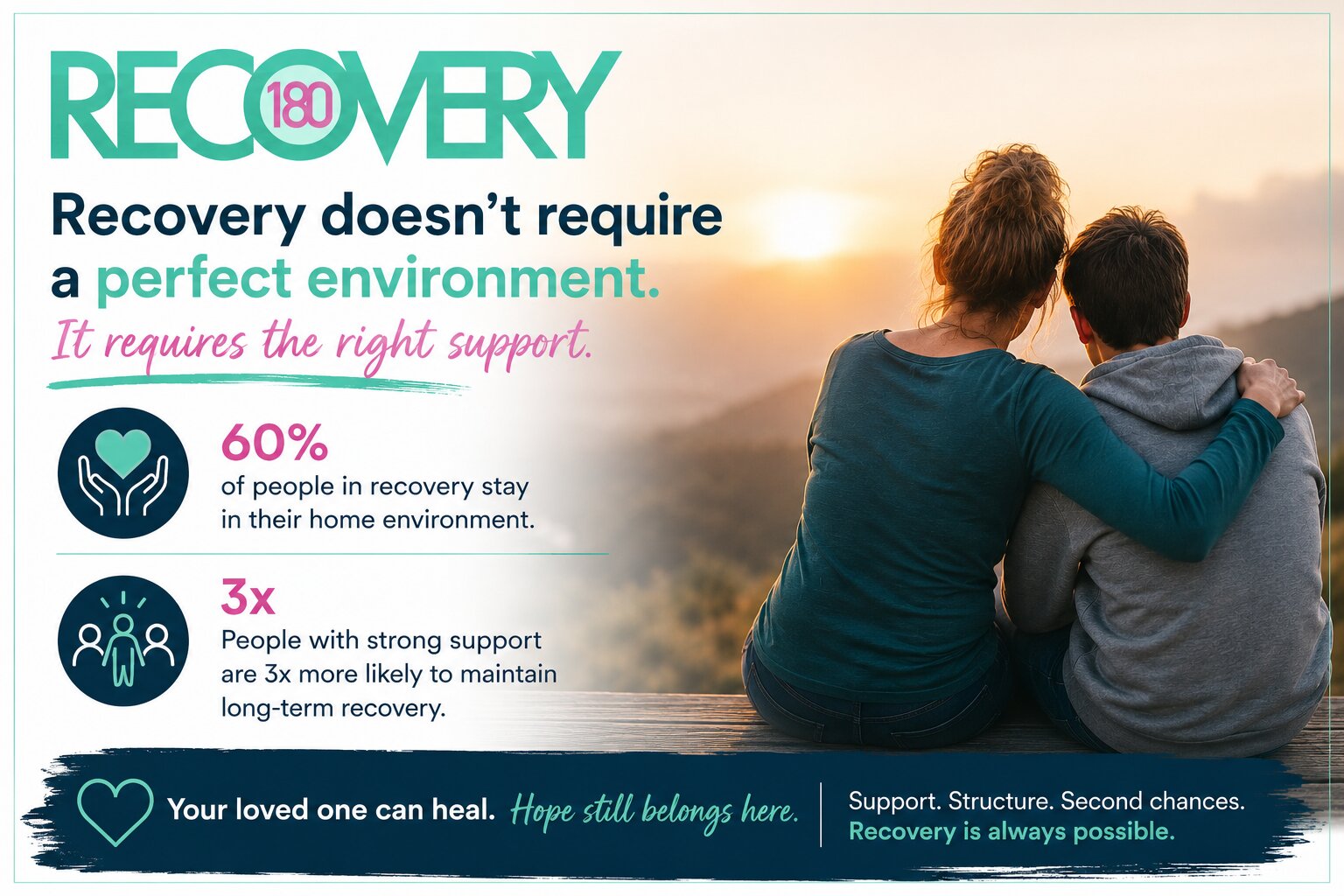
The common factor wasn’t a perfect environment.
The common factor was support.
Support creates opportunities.
Support creates accountability.
Support creates structure.
And structure often creates momentum.
What Parents Can Focus on Today
When your child is using again, it’s easy to focus on every future risk.
What if they relapse again?
What if treatment doesn’t work?
What if they return to old friends?
What if they lose motivation?
Those questions are understandable.
But recovery is usually built one step at a time.
Instead of focusing on every possible future problem, ask:
- Are they connected to treatment?
- Do they have support?
- Are they being honest about their struggles?
- What resources are available right now?
- What healthy boundaries need to be maintained?
Those questions often lead to productive action.
And action tends to reduce helplessness.
For families exploring additional resources, learning about treatment options in Baltimore, MD or treatment options in Elkridge, MD may provide a clearer understanding of available support.
The Part Recovery Doesn’t Require
Recovery does not require a perfect family.
It does not require perfect motivation.
It does not require perfect circumstances.
And it certainly does not require a world without triggers.
What recovery often requires is something much simpler:
A willingness to keep moving forward.
One conversation.
One appointment.
One honest moment.
One decision at a time.
Parents sometimes believe they need proof before they allow themselves to hope.
But hope often comes first.
Then progress follows.
If your son or daughter is using again, your fear makes sense.
Your exhaustion makes sense.
Your frustration makes sense.
But recovery remains possible.
Not because the environment suddenly changes.
Because people can learn to change their relationship with the environment around them.
And that process begins with support.
Frequently Asked Questions
Can someone recover while living in the same house where they used substances?
Yes. Many people achieve recovery while living in familiar environments. Success often depends on support systems, coping skills, accountability, and treatment rather than a complete change of location.
Are triggers always people and places?
No. Triggers can also be emotions such as stress, loneliness, anxiety, boredom, shame, or frustration. Internal triggers are often just as influential as external ones.
Why does my child keep returning to the same friends?
Recovery is a process. Many young adults struggle to separate from familiar social circles immediately. Treatment often helps individuals recognize which relationships support recovery and which may interfere with it.
Does relapse mean treatment failed?
Not necessarily. Relapse can be part of the recovery process for some individuals. While it should be taken seriously, it does not automatically erase previous progress or learning.
Why would live-in treatment be recommended?
Live-in treatment can provide structure, accountability, and distance from high-risk situations while individuals develop recovery skills and establish healthier routines.
What can parents do that actually helps?
Parents can support recovery by encouraging treatment participation, maintaining healthy boundaries, avoiding enabling behaviors, and focusing on progress rather than perfection.
How long does it take for triggers to lose their power?
The timeline varies for every individual. With continued recovery work, many people find that triggers become less intense and easier to manage over time.
Is recovery possible after multiple relapses?
Yes. Many people who achieve long-term sobriety experienced multiple setbacks before finding lasting recovery. Persistence and continued support often make a significant difference.
Call (410) 584-3155 or visit our residential treatment program services to learn more about our residential treatment program services in Baltimore.