


Ninety days.
For a while, that number felt like proof.
Proof that I was changing.
Proof that the hardest part was behind me.
Proof that maybe, finally, addiction was becoming part of my past instead of controlling my future.
I remember counting those days carefully.
Every morning felt like another brick in a foundation I was rebuilding.
Trust was slowly returning.
Relationships felt less fragile.
My mind felt clearer.
Hope started showing up in places where fear had lived for years.
Then I relapsed.
Not after a dramatic crisis.
Not after some catastrophic event.
Just one decision.
Then another.
Then another.
And suddenly I was standing in a place I promised myself I’d never return to.
If you’re reading this because you’ve relapsed after a period of sobriety, I want you to know something important:
The relapse itself wasn’t the most painful part.
The shame was.
The shame convinced me I had lost everything.
The shame almost convinced me not to ask for help again.
And if you’ve recently started searching for information about treatment options, insurance coverage, or an inpatient drug rehab Baltimore program that may work with your CareFirst BlueCross benefits, there is a good chance you’re carrying some version of that same feeling.
Before anything else, I want you to hear this:
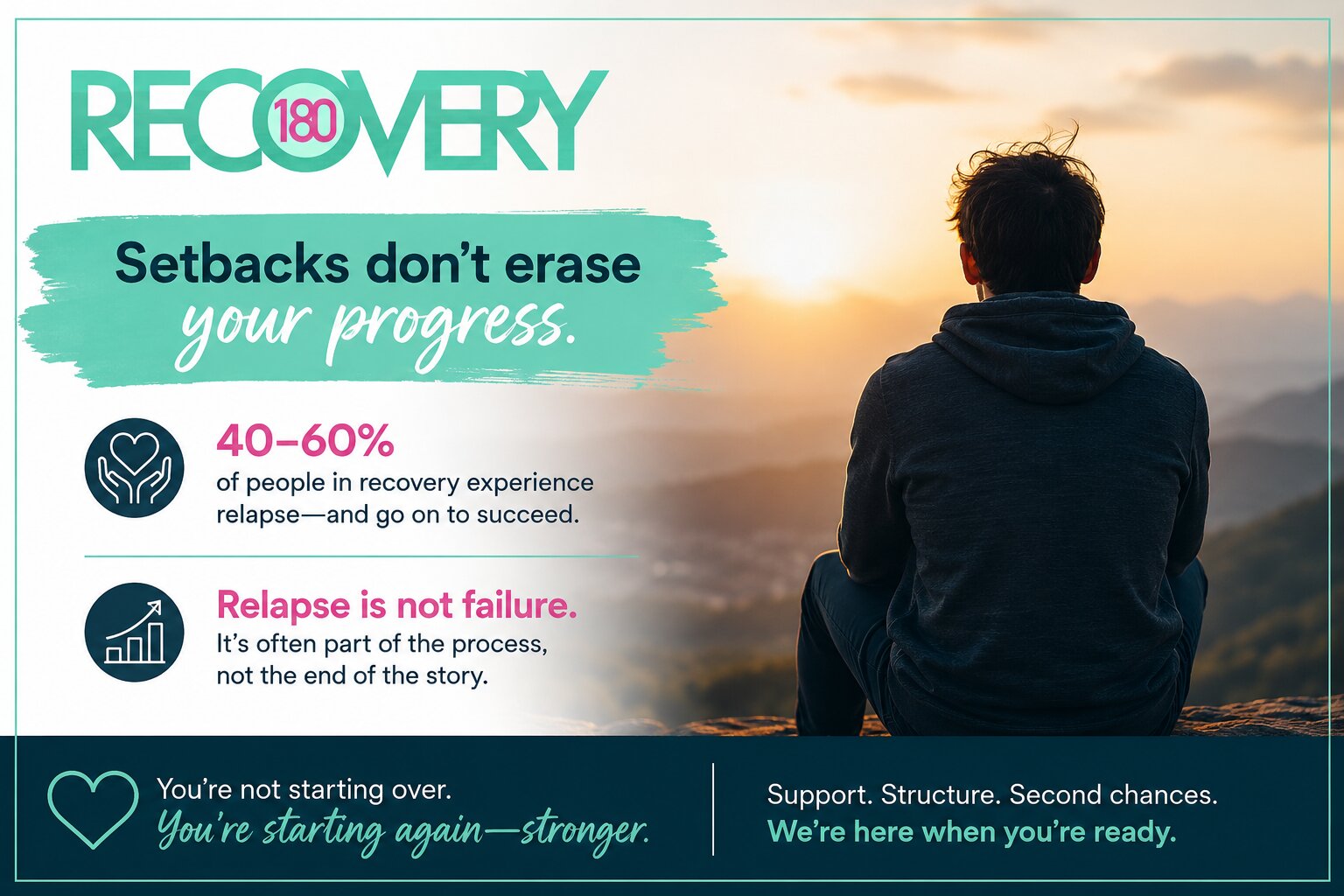
Needing help again does not erase the progress you already made.
If you’re exploring available resources, learning more about residential treatment support can be a meaningful place to begin.
I Thought Relapse Meant I Was Back at Day One
This is one of the biggest lies relapse tells.
The morning after I used, I felt like ninety days had disappeared overnight.
Everything I had worked for seemed gone.
Every meeting.
Every conversation.
Every difficult day.
Every small victory.
Gone.
At least that’s what it felt like.
But recovery doesn’t work that way.
If someone learns a new language and then makes a mistake, they don’t lose everything they learned.
If someone spends months getting stronger and then misses a workout, their muscles don’t disappear overnight.
Recovery is similar.
The relapse was real.
The consequences were real.
But the growth was still there too.
I just couldn’t see it yet.
Many alumni struggle with this perspective after a setback.
They focus so intensely on the relapse that they overlook everything that came before it.
The Hidden Cost Wasn’t What I Expected
When people talk about relapse, they usually focus on substance use.
The drinking.
The drugs.
The behavior itself.
What people don’t talk about enough is what relapse steals emotionally.
It steals confidence.
It steals momentum.
It steals trust in yourself.
I remember looking in the mirror and wondering whether I could believe anything I told myself anymore.
That loss of self-trust hurt more than the relapse itself.
Because addiction thrives when people stop believing change is possible.
Once that belief starts slipping away, it becomes easier to justify staying stuck.
That’s why relapse deserves attention.
Not because it’s proof of failure.
Because it can quietly convince people to stop trying.
I Started Hiding Again
One of the earliest warning signs wasn’t substance use.
It was isolation.
I stopped answering messages.
I avoided people who cared about me.
I stopped talking honestly about what I was feeling.
I told myself I needed time.
I told myself I needed space.
I told myself I could figure things out alone.
The reality was different.
I wasn’t protecting myself.
I was protecting the addiction.
Addiction loves secrecy.
Recovery loves connection.
The more isolated I became, the easier it was to believe the worst things about myself.
That’s one reason reaching out after relapse is so important.
The conversation you avoid is often the conversation you need most.
Why Going Back Felt Harder Than Going the First Time
The first time I entered treatment, I was scared.
The second time, I was embarrassed.
And embarrassment is heavier than fear.
Fear says:
“What if this doesn’t work?”
Embarrassment says:
“What if everyone knows I failed?”
Walking back into treatment felt like admitting defeat.
I expected judgment.
I expected disappointment.
I expected people to question whether I belonged there.
Instead, I found something completely different.
Understanding.
Compassion.
Perspective.
Many of the people around me had experienced setbacks too.
Some had relapsed after thirty days.
Others after six months.
Others after years.
That experience taught me something valuable:
Recovery communities often understand relapse better than the person experiencing it.
The Insurance Question Became Another Excuse
I don’t say this proudly.
But after relapse, I spent weeks worrying about insurance.
I worried about coverage.
I worried about costs.
I worried about whether treatment would be approved.
Those concerns were real.
But if I’m honest, they also became convenient distractions.
As long as I focused on logistics, I didn’t have to focus on making a decision.
Many people do the same thing.
They spend hours researching.
Comparing.
Reading.
Calculating.
Wondering whether CareFirst BlueCross will cover treatment.
Wondering whether they qualify.
Wondering whether it’s worth calling.
The questions matter.
But sometimes they’re hiding a deeper fear.
The fear of trying again.
The fear of hoping again.
The fear of discovering recovery is still possible.
Recovery Looked Different the Second Time
The first time I got sober, I focused on stopping.
The second time, I focused on understanding.
That shift changed everything.
I started asking different questions.
Not:
“How do I avoid using?”
But:
“Why did I return to it?”
Not:
“How do I survive cravings?”
But:
“What happens before the craving shows up?”
Not:
“How do I stay sober forever?”
But:
“How do I stay sober today?”
Recovery became less about fighting addiction and more about understanding it.
That perspective helped me identify patterns I missed before.
Stress.
Isolation.
Overconfidence.
Unaddressed emotions.
Each one played a role.
More Structure Wasn’t a Step Backward
This was one of the hardest lessons for me to accept.
I thought needing more support meant I was failing.
I thought stronger structure meant weaker recovery.
I was wrong.
Sometimes recovery requires additional accountability.
Additional support.
Additional time focused on healing.
For some people, that means counseling.
For others, support groups.
For some, it means returning to live-in treatment or round-the-clock support for a period of time.
At first, that felt discouraging.
Then I realized something important.
The goal wasn’t proving I could do recovery alone.
The goal was actually recovering.
Once I understood that, accepting help became easier.
The People Who Recovered Weren’t Perfect
One observation changed how I viewed relapse.
The people I met with long-term sobriety weren’t perfect.
They weren’t stronger than everyone else.
They weren’t immune to difficult emotions.
They weren’t free from mistakes.
What made them different was persistence.
When recovery became difficult, they stayed connected.
When they struggled, they talked about it.
When setbacks happened, they adjusted instead of disappearing.
They treated recovery like a practice rather than a performance.
That mindset mattered.
Because recovery isn’t about never falling.
It’s about continuing to get back up.
What I Wish Someone Had Told Me Earlier
I wish someone had told me that relapse often distorts reality.
It convinces you that one mistake erased every victory.
It convinces you that you’ve disappointed everyone.
It convinces you that you’re farther behind than you really are.
None of those things were true.
The lessons remained.
The growth remained.
The possibility remained.
Even when I couldn’t see it.
If you’re reading this after a relapse, there is a good chance you’re judging yourself more harshly than anyone else would.
And there is a good chance you’re underestimating how much progress still exists beneath the disappointment.
If You’re Thinking About Reaching Out Again
Maybe you’ve been researching options quietly.
Maybe you’re trying to determine what your insurance covers.
Maybe you’re wondering whether treatment is necessary.
Maybe you’re asking yourself whether going back means you’ve failed.
I understand those questions.
I’ve asked them too.
But here’s what I learned:
The strongest recovery decision I ever made wasn’t getting sober the first time.
It was refusing to quit after I relapsed.
Because relapse wasn’t the end of the story.
The decision that followed mattered more.
For individuals exploring additional support, learning about available support in Baltimore, MD or support in Elkridge, MD may help clarify the next step.
You don’t need to have everything figured out.
You don’t need certainty.
You don’t need a perfect plan.
You just need enough willingness to keep moving forward.
And sometimes that’s where recovery begins again.
Frequently Asked Questions
Does relapse mean treatment didn’t work?
No. Many people gain valuable recovery skills during treatment that continue helping them after a relapse. A setback may indicate that additional support is needed, not that previous treatment was unsuccessful.
Is it common to return to treatment after relapse?
Yes. Many people return to treatment at some point in their recovery journey. Seeking help again is often a sign of commitment to recovery rather than failure.
Can someone recover after multiple relapses?
Absolutely. Many individuals who achieve long-term sobriety experienced multiple relapses before establishing stable recovery.
Why does relapse feel so emotionally overwhelming?
Relapse often affects confidence, trust, hope, and self-esteem. Many people struggle more with shame after relapse than with the substance use itself.
How do I know if I need a higher level of support?
If cravings feel overwhelming, relapse continues occurring, or recovery feels increasingly difficult to maintain, additional structure and accountability may be beneficial.
Will treatment feel different the second time?
Often, yes. Many people enter treatment with greater self-awareness after a relapse, allowing them to approach recovery from a different perspective.
Can CareFirst BlueCross help cover addiction treatment?
Many insurance plans offer benefits for substance use treatment services. Coverage varies, so it’s helpful to speak directly with a provider to understand available options.
What should I do after a relapse?
The most important step is reaching out for support as soon as possible. Honest conversations, professional guidance, and reconnecting with recovery resources can help prevent a temporary setback from becoming a longer struggle.
Call (410) 584-3155 or visit our residential treatment program services to learn more about our residential treatment program services Baltimore, Maryland.