


When your child is using again, it can feel like you’re stuck in a painful loop you don’t know how to break. You’ve tried to support them. Maybe they’ve gone to treatment before, and maybe it didn’t stick. Now you’re staring down another decision, full of fear and doubt: Would residential treatment even help this time?
Let’s pause here. This blog isn’t about convincing you. It’s about helping you understand—clearly and gently—what a residential treatment program really looks like, hour by hour, so you can make informed choices from a place of hope instead of fear.
You can also explore our residential treatment program in Baltimore, MD to learn how we support families and young adults in real-world recovery.
Morning Routines: Structure as a Healing Tool
Mornings in residential treatment begin early—but not harshly. Most programs start the day around 7:00 AM with a consistent schedule: wake-up, hygiene, breakfast, and a morning meditation or check-in group.
That may sound basic. But for someone in early recovery, basic is healing. Consistency helps reset circadian rhythms, build trust in their environment, and ground them before deeper emotional work begins.
Think of it like this: You can’t rebuild a house without first steadying the foundation. Morning routines are part of that emotional scaffolding.
Group Therapy: Daily Conversations That Go Somewhere
Group therapy is usually the heart of the daily schedule. But it’s not just people sitting in a circle talking about trauma or addiction. A trained therapist leads each session with a clinical focus and therapeutic goal.
Topics might include:
- Emotion regulation
- Coping strategies for cravings and stress
- Relationship boundaries
- Understanding triggers and patterns
- Building healthy communication
Some groups follow specific evidence-based modalities like Cognitive Behavioral Therapy (CBT) or Dialectical Behavior Therapy (DBT). Others are more open process groups, giving clients space to reflect and connect.
There’s also variety—art therapy, experiential therapy, even movement-based groups—designed to engage different learning and healing styles.
Individual Therapy: Personalized, Consistent Care
Each client is assigned a primary therapist who meets with them one-on-one, usually once or twice a week. These sessions allow for deeper exploration of personal history, family dynamics, co-occurring mental health conditions, or recent relapses.
For a young adult who’s been resistant to opening up, this dedicated relationship can be a breakthrough space. Trust builds slowly—but consistently. And with the right clinical match, it can be transformative.
Education and Life Skills: Recovery That Prepares for Real Life
Addiction doesn’t just impact emotional health—it often derails basic adult development. That’s why strong programs integrate practical life skills training into the week.
This might look like:
- Cooking and grocery planning workshops
- Resume building and mock interviews
- Budgeting and time management skills
- Conflict resolution and assertiveness training
The goal isn’t to “fix” your child—it’s to equip them. To send them back into life with tools they may have missed the first time around.
Meals, Nutrition, and Movement: Whole-Person Recovery
Clients eat regular, nutritious meals in community. Often, they participate in helping plan or prep meals—both to practice independence and rebuild a positive relationship with food.
Most programs also offer light, supervised movement. This could include yoga, daily walks, or guided exercise. Bodies affected by addiction may be malnourished, underslept, or physically depleted. A big part of healing is simply letting the body begin to feel safe again.
There’s also built-in downtime for rest. Unstructured, screen-free time allows clients to journal, reflect, read, or simply exist without pressure.
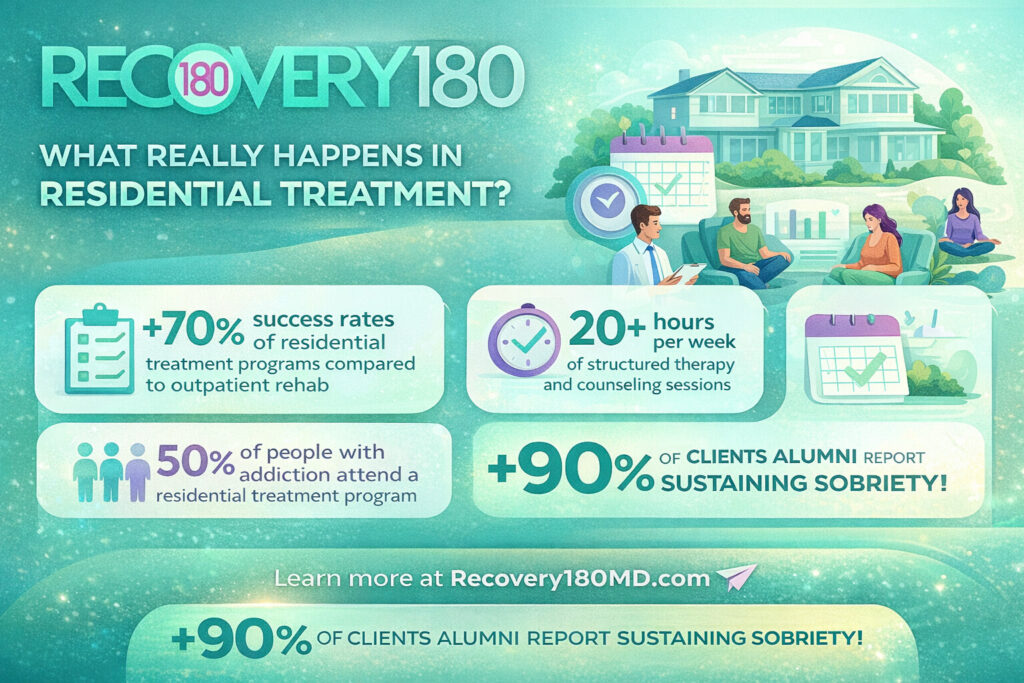
Evening Activities: Calm Instead of Chaos
Evenings are intentionally slower. There might be a community group to reflect on the day, optional 12-step or recovery meetings, or light activities like art, music, or movie night.
This matters more than most people realize. For someone used to the adrenaline of substance use or chaotic home environments, learning to tolerate quiet—and even enjoy it—is a big emotional milestone.
It’s Not a “Lockdown”—It’s a Therapeutic Container
Parents often ask: “Will they feel trapped?”
Here’s the truth: Residential treatment is structured and supervised, but not punitive. It’s not a jail. It’s not a bootcamp. Most clients can leave with proper discharge or family coordination if needed.
What they find, surprisingly often, is relief. A break from the pressure. A place to exhale.
There are rules—like curfews, group attendance, no personal electronics—but they exist to create safety, not to punish.
What About the Family?
You’re still part of the story.
Many programs include family therapy or parent support groups. You may be invited to participate in a family weekend, or meet virtually with your child’s therapist to better understand the treatment goals.
The focus is often twofold:
- Helping you understand addiction and the recovery process
- Supporting you in setting healthy boundaries moving forward
Even if your child is 20 years old, your relationship with them still matters. You’re not expected to do it all—but you’re also not expected to disappear.
If you’re exploring options outside Baltimore, we also support families seeking treatment options in Elkridge, MD.
What Happens After Residential?
Discharge planning begins early. Most clients don’t “graduate and go home”—they step down into another level of care like Partial Hospitalization (PHP), Intensive Outpatient (IOP), or sober living. This continuum of care helps reinforce progress and catch relapse triggers early.
At Recovery180, we work with families to build realistic post-treatment plans—ones that support both the client and their loved ones.
FAQ: Residential Treatment Program Questions from Parents
Is it okay to feel uncertain about sending my child to residential treatment?
Yes. Uncertainty doesn’t mean you’re failing—it means you’re human. Many parents feel guilt, fear, and hope all at once. A good program will honor that and walk alongside you.
How long do most residential programs last?
Length varies. Some offer 30-day stabilization, while others provide 60- or 90-day options. Clinical need, insurance, and client progress all influence this decision.
Can I talk to my child while they’re in treatment?
Yes, usually after an initial adjustment period (often the first 3–7 days). Phone calls and family visits are typically scheduled and supervised to support healing, not interrupt it.
What if my child doesn’t want to go?
It’s common for young adults to resist treatment. That doesn’t mean they won’t engage once there. Many arrive angry or ambivalent and end up staying willingly once they feel safe.
What makes a residential program different from outpatient care?
Residential care provides 24/7 support, structure, and supervision. It removes outside triggers and distractions, allowing deeper work to happen sooner. Outpatient programs are valuable too—but they work best when someone is already stable.
Healing Starts with Understanding
There’s no “perfect time” to seek help. And there’s no shame in needing support more than once.
What matters most isn’t whether your child has been to treatment before—it’s whether the next step is taken with clarity, compassion, and a commitment to trying again.
If you’re wondering whether a residential treatment program could help, know this: change is possible. Support is real. And you don’t have to hold this alone.
📞 Ready to take the next step? Call (410) 584-3155 or visit to learn more about our residential treatment program services in Baltimore, MD. You deserve support as much as your child does.