


An opioid overdose can happen in minutes, often before emergency responders can arrive. For families living with a loved one who uses prescription opioids, heroin, or fentanyl, knowing how to respond can mean the difference between life and death.
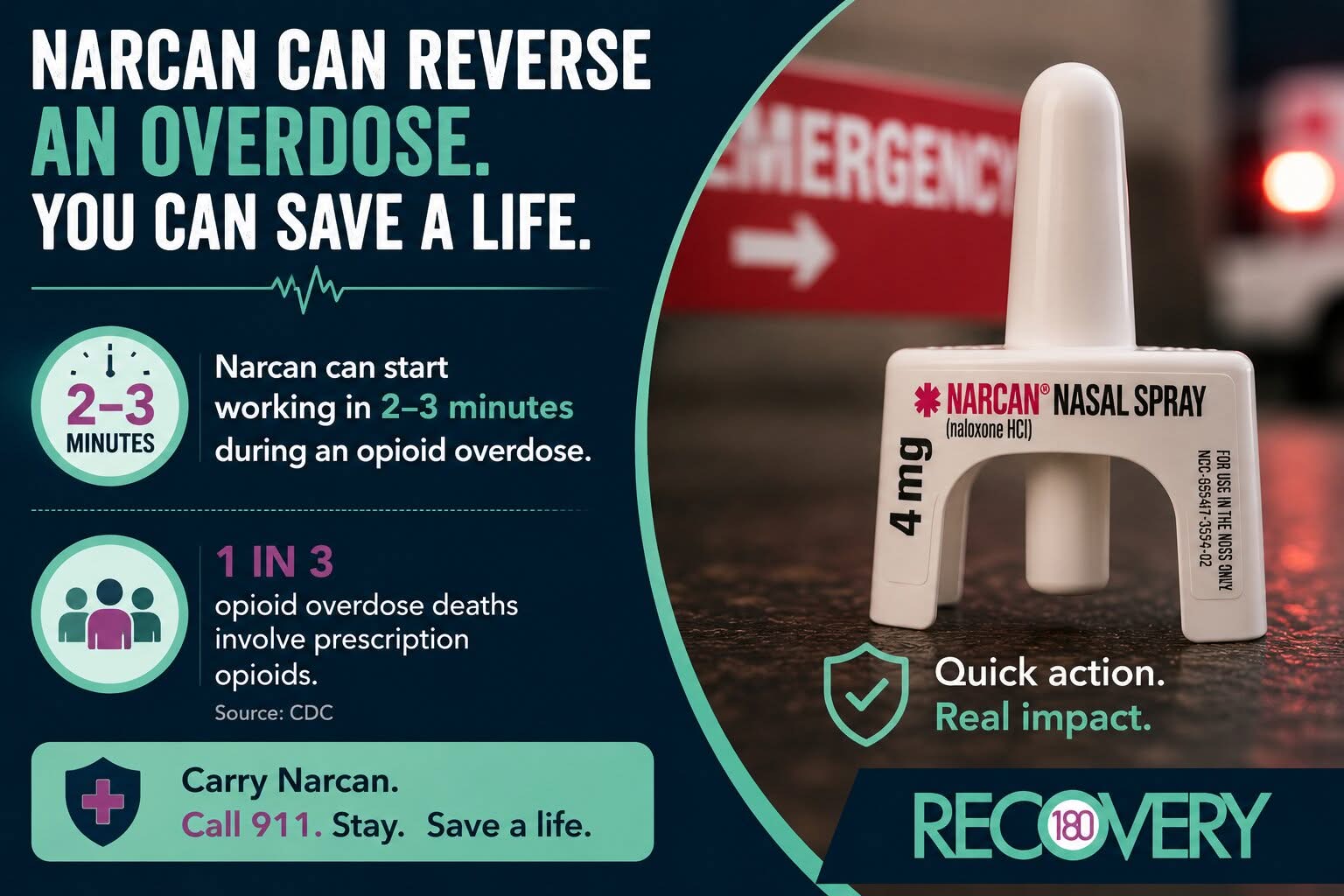
One of the most important tools available today is Narcan nasal spray. It is designed to temporarily reverse the effects of an opioid overdose and give someone a chance to receive emergency medical care.
However, it is equally important to understand what Narcan can and cannot do.
It is not a substitute for emergency treatment, and it does not treat opioid use disorder. It is a temporary emergency medication that buys valuable time until medical professionals take over.
If someone you love has experienced an overdose, carries a high risk of overdose, or struggles with opioid misuse, learning how to use Narcan and seeking professional opioid addiction treatment can both play important roles in protecting their health and future.
What Narcan (Naloxone) Nasal Spray Is
Narcan nasal spray is a brand-name form of naloxone, a medication that rapidly reverses the effects of an opioid overdose.
Naloxone has been used by emergency medical professionals for decades and is now widely available for public use because opioid overdoses have become increasingly common.
Narcan is designed to be simple enough for anyone to administer during an emergency, including:
- Parents
- Spouses
- Friends
- Coworkers
- Teachers
- Community members
- First responders
The medication comes as a prefilled nasal spray that requires no assembly or mixing.
It is intended for emergencies involving opioids such as:
- Fentanyl
- Heroin
- Oxycodone
- Hydrocodone
- Morphine
- Methadone
- Codeine
- Prescription opioid pain medications
If opioids are not involved, naloxone is generally not harmful, but it may not improve the person’s condition because it only works against opioid effects.
How Narcan Reverses an Opioid Overdose
Opioids attach to specific receptors in the brain that help regulate pain, breathing, and consciousness.
During an overdose, opioids can overwhelm these receptors and severely slow or stop breathing. Without oxygen, permanent brain injury or death can occur within minutes.
Narcan works because it is an opioid receptor antagonist.
Rather than activating opioid receptors, it quickly attaches to them and displaces opioid molecules that are already bound there.
As a result:
- Breathing may begin to improve.
- Consciousness may partially return.
- Oxygen levels can increase.
- The immediate overdose effects may temporarily reverse.
This reversal can happen within two to three minutes.
However, Narcan’s effects are temporary.
Many opioids—especially fentanyl and long-acting prescription medications—remain in the body longer than naloxone does. As the medication wears off, overdose symptoms can return, making emergency medical care essential even if the person appears to recover.
Signs Someone May Be Experiencing an Opioid Overdose
Recognizing an overdose quickly allows treatment to begin sooner.
Common warning signs include:
- Slow, shallow, or absent breathing
- Difficulty waking the person
- Unresponsiveness
- Blue, gray, or pale lips and fingernails
- Pinpoint pupils
- Limp body
- Gurgling, choking, or snoring sounds
- Cold or clammy skin
If you suspect an opioid overdose, treat it as a medical emergency.
How to Use Narcan Nasal Spray
Using Narcan correctly is straightforward, but following each step matters.
Step 1: Check for Responsiveness
Try to wake the person.
- Call their name loudly.
- Shake their shoulders gently.
- Rub your knuckles firmly against the center of their chest (sternal rub) if they do not respond.
If they remain unresponsive or are barely breathing, prepare to use Narcan.
Step 2: Call 911 Immediately
Even if you have Narcan available, call 911 right away.
Tell the dispatcher:
- Your location
- That the person may be experiencing an opioid overdose
- That naloxone is being administered (or has been administered)
Emergency responders can provide additional treatment and transport the person to the hospital.
Step 3: Position the Person
Lay the person flat on their back.
Support the head so you can easily access one nostril.
Step 4: Administer the Medication
Remove the device from its packaging.
Do not test or prime the spray.
Insert the tip into one nostril until your fingers touch the outside of the nose.
Press the plunger firmly to release the full dose.
Each device contains only one dose.
Step 5: Monitor Breathing
After giving Narcan:
- Watch for signs of breathing improvement.
- If trained, begin rescue breathing or CPR if needed while waiting for emergency responders.
- Continue monitoring the person’s condition.
If there is no response after about 2–3 minutes, administer another dose using a new device, preferably into the other nostril if possible.
Multiple doses may be needed, particularly with fentanyl or potent synthetic opioids.
Step 6: Place Them in the Recovery Position
If the person begins breathing but is not fully awake, carefully roll them onto their side.
The recovery position helps reduce the risk of choking if vomiting occurs.
Continue watching their breathing until emergency personnel arrive.
What to Do After Using Narcan
Many people mistakenly believe that once someone wakes up, the emergency has ended.
It has not.
Naloxone usually lasts only 30 to 90 minutes, while many opioids remain active much longer.
As Narcan wears off:
- Breathing can slow again.
- The person may become unconscious again.
- Another overdose episode can occur.
That is why everyone who receives Narcan should still be evaluated in an emergency department, even if they seem completely alert afterward.
While waiting for EMS:
- Stay with the person.
- Monitor breathing closely.
- Keep them in the recovery position if they are breathing independently.
- Administer another dose if overdose symptoms return before help arrives.
Some people awaken confused, frightened, or experiencing withdrawal symptoms. Try to remain calm and explain that help is on the way.
Why Every Family Affected by Opioid Use Should Carry It
Many overdoses occur inside the home.
Parents often assume they would know if their adult child relapsed.
Spouses sometimes believe a loved one is “doing better.”
Unfortunately, opioid use disorder often involves periods of recovery followed by relapse, and tolerance changes during abstinence can significantly increase overdose risk.
Keeping Narcan available can provide an opportunity to save a life during those critical first minutes.
Families should consider having it available if someone they love:
- Has opioid use disorder
- Previously overdosed
- Uses fentanyl or heroin
- Takes high-dose prescription opioids
- Has recently completed detox or incarceration
- Has experienced relapse after a period of sobriety
Having Narcan is not enabling drug use.
It is comparable to keeping an AED in a public building or carrying an epinephrine auto-injector for someone with severe allergies—it prepares you to respond during a medical emergency while creating an opportunity for longer-term care.
Saving a Life Is the First Step—Recovery Comes Next
An overdose reversal can become a turning point.
Some people decide to seek help immediately after surviving an overdose. Others need encouragement from family members and healthcare professionals before accepting treatment.
Either way, surviving the overdose creates the opportunity for recovery.
Comprehensive treatment often includes:
- Medical assessment
- Withdrawal management when appropriate
- Individual counseling
- Group therapy
- Medication-assisted treatment when clinically appropriate
- Relapse prevention planning
- Family education
- Long-term recovery support
The goal is not only preventing another overdose but helping someone build a healthier future that no longer revolves around opioid use.
Frequently Asked Questions
How does Narcan nasal spray work?
Narcan contains naloxone, an opioid receptor antagonist that quickly displaces opioids from receptors in the brain. This can temporarily restore breathing and reverse the life-threatening effects of an opioid overdose, but emergency medical care is still required because the medication eventually wears off.
Where can you get Narcan?
Narcan is available in many pharmacies without an individual prescription in many states. It may also be available through local health departments, community harm-reduction organizations, hospitals, and overdose prevention programs. Availability and access can vary depending on state and local policies.
What do you do after using Narcan?
Call 911 immediately if you have not already done so, stay with the person, monitor their breathing, place them in the recovery position if they are breathing on their own, and be prepared to administer another dose if overdose symptoms return before emergency responders arrive. Even if the person wakes up, they should still be evaluated in an emergency department because the opioid may outlast the effects of naloxone.
Final Thoughts
Learning how to use Narcan nasal spray is one of the most practical ways families can prepare for an opioid emergency. It can temporarily reverse an overdose and create the time needed for emergency medical professionals to take over, but it is only one part of the response.
The next step is addressing the underlying opioid use disorder. Professional treatment offers the medical care, counseling, and long-term support needed to reduce the risk of future overdoses and help individuals move toward lasting recovery.
If you or someone you love is struggling with opioid addiction or another substance use disorder, Recovery 180 is here to help. Call 443.289.8606 to speak with our team about treatment options and take the first step toward recovery.