


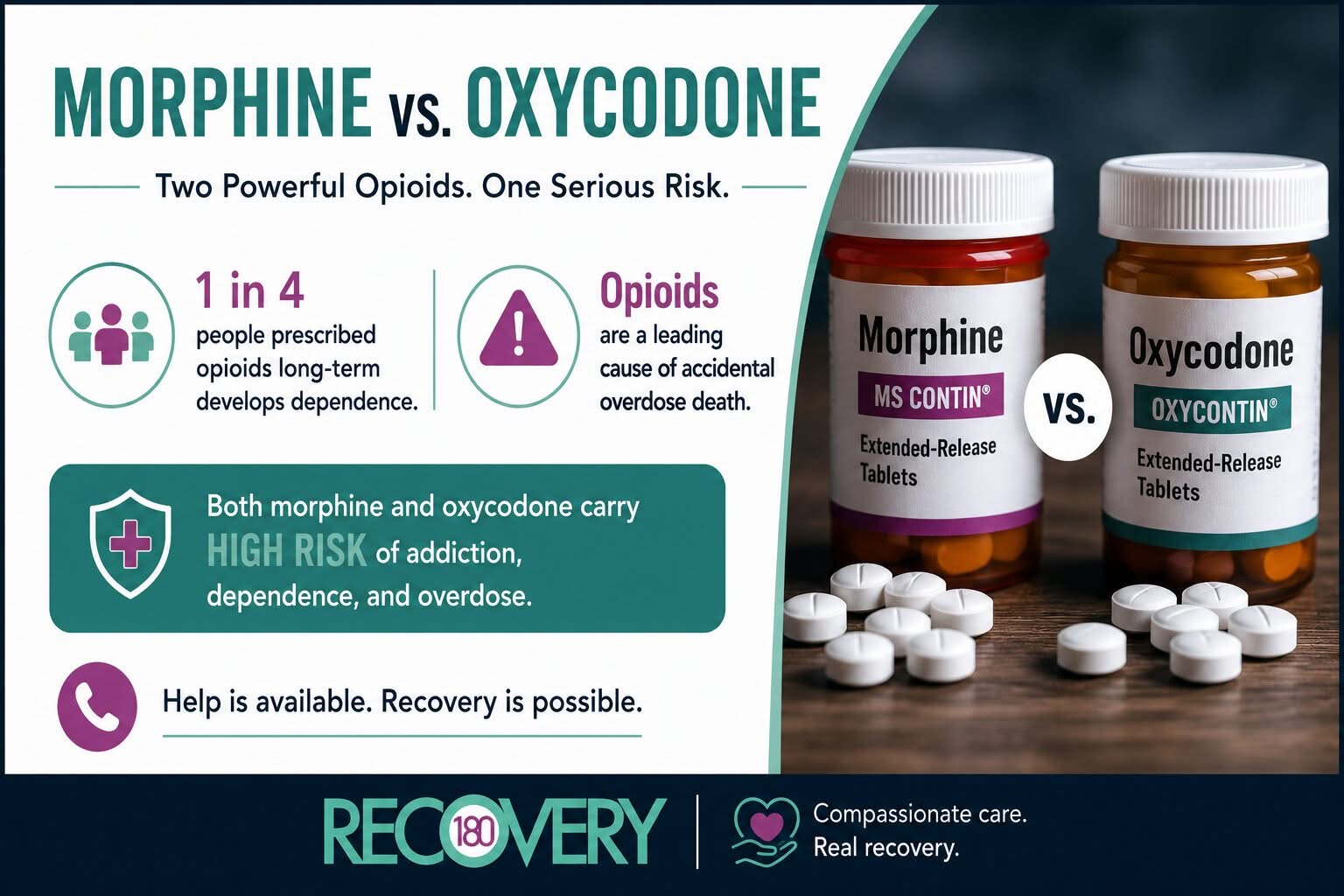
Morphine and oxycodone are two of the most commonly prescribed opioid pain medications in the United States. Both can provide meaningful pain relief when used appropriately under medical supervision, but both also carry serious risks, including misuse, physical dependence, addiction, and overdose.
Many people searching for morphine vs oxycodone want to know which medication is stronger, safer, or more addictive. The answer is more nuanced than many realize. Although these medications share similarities, they differ in how they are absorbed, prescribed, and used for pain management.
If you or someone you love has developed a dependence on prescription opioids, understanding these medications is only part of the picture. Professional opioid addiction treatment can help address the underlying substance use disorder and support long-term recovery.
This guide explains the differences between morphine and oxycodone, how each medication works, and why both require careful medical supervision.
Morphine vs. Oxycodone at a Glance
| Feature | Morphine | Oxycodone |
|---|---|---|
| Drug Class | Prescription opioid analgesic | Prescription opioid analgesic |
| Controlled Substance | Schedule II | Schedule II |
| Common Brand Names | MS Contin, Kadian | OxyContin, Percocet, Roxicodone |
| Primary Use | Moderate to severe pain | Moderate to severe pain |
| Available Forms | Immediate-release, extended-release, injectable | Immediate-release, extended-release, oral combinations |
| Addiction Risk | High | High |
| Overdose Risk | High | High |
Both medications require close medical supervision and should only be used exactly as prescribed.
What Each Drug Is
Morphine
Morphine is one of the oldest and most widely used opioid medications. It is often considered the reference opioid against which other opioid medications are compared in clinical settings.
Morphine works by attaching to opioid receptors in the brain and spinal cord, reducing the perception of pain while also producing feelings of relaxation and sedation.
Common brand names include:
- MS Contin
- Kadian
- Roxanol
Morphine is commonly prescribed for:
- Cancer-related pain
- Major injuries
- Post-surgical pain
- Severe chronic pain
- Palliative and hospice care
It is available in several forms, including:
- Immediate-release tablets
- Extended-release tablets
- Oral liquid
- Injectable formulations
Oxycodone
Oxycodone is another powerful prescription opioid frequently used to treat moderate to severe pain.
Like morphine, it binds to opioid receptors within the central nervous system, helping reduce pain signals while producing calming and euphoric effects that contribute to its misuse potential.
Common brand names include:
- OxyContin
- Percocet (combined with acetaminophen)
- Roxicodone
Doctors may prescribe oxycodone after:
- Surgery
- Serious injuries
- Certain chronic pain conditions
- Cancer treatment
It is available as:
- Immediate-release tablets
- Extended-release tablets
- Oral solutions
- Combination products with acetaminophen
Key Differences
Although morphine and oxycodone work through similar mechanisms, they differ in several important ways.
Absorption (Bioavailability)
One notable difference involves how efficiently each medication is absorbed after being swallowed.
Oxycodone generally has higher oral bioavailability than morphine, meaning a larger percentage of the medication reaches the bloodstream after it is taken by mouth.
Morphine undergoes more extensive metabolism before reaching systemic circulation, which can influence prescribing decisions.
Formulations
Both medications are available in immediate-release and extended-release formulations.
However, oxycodone is more commonly found in combination medications, particularly products that also contain acetaminophen.
Morphine is more frequently used in hospital settings because injectable forms are widely available.
Medical Uses
Both medications treat moderate to severe pain.
Morphine is often selected for:
- Hospitalized patients
- Serious trauma
- Advanced cancer pain
- End-of-life care
Oxycodone is commonly prescribed for:
- Recovery after surgery
- Orthopedic injuries
- Chronic pain management
- Outpatient pain treatment
The best choice depends on the individual’s medical condition, medical history, response to treatment, and overall treatment plan.
Routes of Administration
Morphine is available in:
- Tablets
- Capsules
- Liquid
- Intravenous (IV)
- Intramuscular injections
Oxycodone is primarily available as:
- Oral tablets
- Capsules
- Oral liquid
- Extended-release oral formulations
Which Is Stronger?
There is no simple answer.
Many people expect one medication to be universally stronger than the other, but several factors affect opioid strength in real-world medical care, including:
- The specific formulation
- Individual metabolism
- Previous opioid exposure
- Pain severity
- Overall health
- Clinical goals
Healthcare providers consider many factors when selecting an opioid medication. Because these drugs affect individuals differently, direct comparisons are not straightforward.
Rather than asking which medication is stronger, a more useful question is whether the medication is appropriate, necessary, and being used safely under medical supervision.
Regardless of which medication is prescribed, both can produce:
- Drowsiness
- Slowed breathing
- Physical dependence
- Tolerance
- Addiction
- Potentially fatal overdose
The Addiction and Dependence Risk of Both
One of the biggest similarities between morphine and oxycodone is their ability to produce dependence.
Even when taken exactly as prescribed, the body can gradually adapt to opioid medications.
Over time, people may develop:
Tolerance
Tolerance occurs when the body becomes less responsive to the medication, meaning higher amounts may eventually be needed to achieve the same level of pain relief.
Physical Dependence
Physical dependence means the body has adapted to the medication.
If opioid use suddenly stops, withdrawal symptoms may develop, including:
- Muscle aches
- Sweating
- Anxiety
- Nausea
- Restlessness
- Insomnia
- Chills
- Vomiting
Physical dependence alone does not necessarily mean someone has addiction, but it increases the importance of careful medical supervision when stopping opioid therapy.
Addiction
Opioid addiction, also known as opioid use disorder, involves compulsive opioid use despite harmful consequences.
Warning signs may include:
- Running out of medication early
- Taking more than prescribed
- Visiting multiple providers for prescriptions
- Craving opioids
- Continuing use despite relationship or work problems
- Using opioids to cope with stress or emotions rather than pain
Both morphine and oxycodone are Schedule II controlled substances because they have accepted medical uses but also carry a high potential for misuse, dependence, and addiction.
When Prescription Opioid Use Becomes a Bigger Problem
Many people who develop opioid addiction never intended to misuse medication.
It often begins with a legitimate prescription after surgery, an injury, or treatment for chronic pain.
Over time, increasing tolerance, physical dependence, and cravings can make it difficult to stop without professional help.
Seeking treatment early can reduce the risk of overdose and improve long-term recovery outcomes.
Treatment may include:
- Medical evaluation
- Withdrawal management
- Medication-assisted treatment (when appropriate)
- Individual counseling
- Group therapy
- Relapse prevention planning
- Family support
Recovery is possible, regardless of whether opioid use began with morphine, oxycodone, or another prescription medication.
Frequently Asked Questions
Is morphine stronger than oxycodone?
Neither medication is universally stronger. Their effects depend on many factors, including the formulation, the person’s medical history, previous opioid exposure, and how their body responds to the medication. Healthcare providers determine the most appropriate opioid based on each patient’s clinical needs rather than making a simple strength comparison.
Which is more addictive—morphine or oxycodone?
Both medications have a high potential for misuse, physical dependence, and addiction. Because they are Schedule II controlled substances, each should be taken only as prescribed and under close medical supervision.
Can you switch from morphine to oxycodone?
Sometimes healthcare providers change a patient’s pain medication when clinically appropriate. However, switching between opioids should only be done under the supervision of a qualified medical professional. Attempting to switch medications without medical guidance can increase the risk of withdrawal, overdose, or other serious complications.
Final Thoughts
Comparing morphine vs oxycodone can help patients better understand two commonly prescribed opioid medications, but the most important takeaway is that both carry significant risks alongside their medical benefits. Neither medication should be viewed as “safe” simply because it was prescribed.
If opioid use has become difficult to control, help is available. Recovery 180 provides compassionate, evidence-based care for individuals struggling with opioid use disorder. Our team works with people throughout Baltimore, Elkridge, Taneytown, and surrounding Maryland communities to help them begin lasting recovery.
If you or someone you love is struggling with opioid addiction or another substance use disorder, Recovery 180 is here to help. Call 443.289.8606 to speak with our team about treatment options and take the first step toward recovery.