


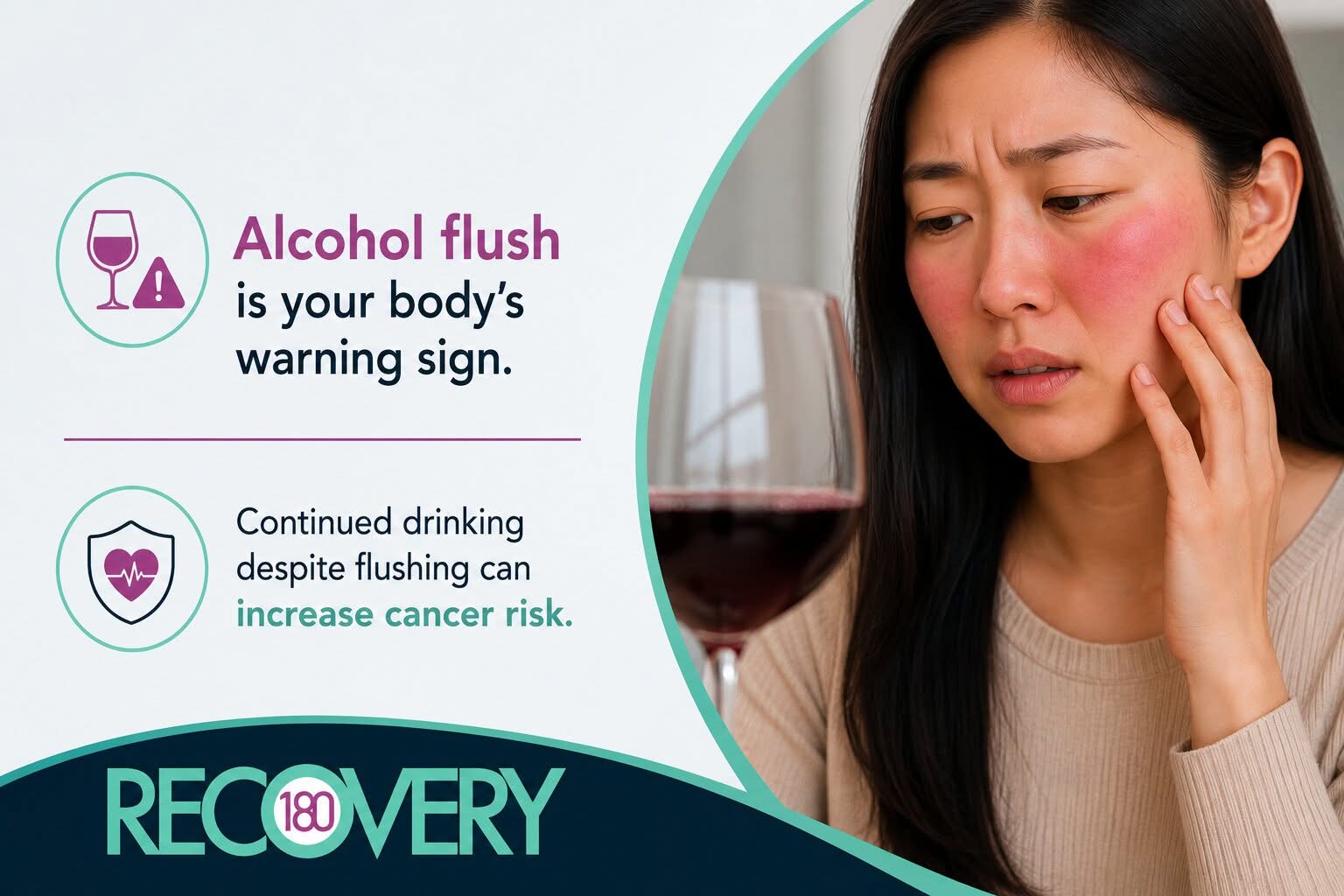
For some people, having even a small amount of alcohol causes their face to become noticeably red within minutes. Their cheeks feel warm, their neck may flush, and they might also experience a racing heartbeat or mild nausea.
Many assume this reaction is harmless or simply means they “can’t handle alcohol.”
In reality, this response is often caused by the body’s inability to process alcohol efficiently. While the redness itself is not usually dangerous, continuing to drink despite it may increase exposure to a toxic substance called acetaldehyde, which has been linked to an increased risk of certain cancers, particularly esophageal cancer, in people with this genetic trait.
If you’ve searched for alcohol flush reaction, it’s important to understand what causes it, what it may mean for your health, and why continuing to drink despite repeated flushing deserves attention. If alcohol has become difficult to control, professional alcohol addiction treatment can help address the underlying drinking pattern before more serious consequences develop.
What the Alcohol Flush Reaction Is
The alcohol flush reaction is a physical response that causes rapid reddening of the:
- Face
- Neck
- Chest
- Sometimes the ears and shoulders
The flushing usually develops shortly after drinking alcohol and may be accompanied by:
- Warmth in the skin
- Rapid heartbeat
- Headache
- Dizziness
- Nausea
- Lightheadedness
The reaction is most common among people of East Asian ancestry because of a genetic variation affecting alcohol metabolism, but it can occur in people from other backgrounds as well.
While some people experience only mild redness, others develop significant flushing after just one alcoholic drink.
Why It Happens
To understand why alcohol causes flushing, it helps to know how the body processes alcohol.
When alcohol is consumed, it is broken down in two main steps.
Step 1: Alcohol Becomes Acetaldehyde
The liver first converts alcohol into a chemical called acetaldehyde.
Acetaldehyde is toxic and far more harmful than alcohol itself.
Step 2: Acetaldehyde Is Normally Broken Down
Under normal circumstances, an enzyme called aldehyde dehydrogenase 2 (ALDH2) quickly converts acetaldehyde into acetate, a much less harmful substance that the body can eliminate.
However, some people inherit a genetic variation that reduces the activity of the ALDH2 enzyme.
As a result:
- Acetaldehyde builds up rapidly.
- Blood vessels widen.
- Facial flushing develops.
- Other unpleasant symptoms appear.
The redness is essentially a visible sign that acetaldehyde is accumulating because the body cannot process it efficiently.
The Health Risks of the Alcohol Flush Reaction
Many people think facial flushing is simply embarrassing.
The more important concern is what the flushing represents.
Acetaldehyde is classified as a human carcinogen. When it builds up because of reduced ALDH2 activity, continued alcohol consumption may increase exposure to this harmful compound.
Research has found that people with ALDH2 deficiency who continue to drink heavily have a higher risk of developing certain cancers, particularly esophageal cancer, compared with people who do not have the deficiency. Alcohol use is also associated with increased risks for several other cancers, and acetaldehyde is believed to play a role in this process.
Having the alcohol flush reaction does not mean someone will develop cancer.
However, it is considered an important warning sign that the body is not processing alcohol normally, and repeatedly drinking despite flushing may increase health risks over time.
Beyond cancer concerns, continued heavy alcohol use may also contribute to:
- Liver disease
- High blood pressure
- Heart problems
- Pancreatitis
- Cognitive impairment
- Alcohol dependence
Alcohol Flush vs. Alcohol Allergy vs. Alcohol Intolerance — the Differences
These terms are often confused, but they describe different conditions.
Alcohol Flush Reaction
Usually caused by reduced ALDH2 enzyme activity.
Typical symptoms include:
- Red face
- Warm skin
- Rapid heartbeat
- Mild nausea
Alcohol Allergy
A true alcohol allergy is uncommon.
An allergic reaction involves the immune system and may cause:
- Hives
- Swelling
- Difficulty breathing
- Wheezing
- Severe allergic reactions
A suspected allergy requires prompt medical evaluation.
Alcohol Intolerance
Alcohol intolerance refers to difficulty processing alcohol or certain ingredients in alcoholic beverages.
Symptoms may include:
- Flushing
- Stomach discomfort
- Headaches
- Nasal congestion
- Digestive upset
Some people react to ingredients such as sulfites, histamines, or grains rather than alcohol itself.
A healthcare provider can help determine the underlying cause if symptoms are frequent or severe.
What Heavy Flushing Plus Continued Drinking Can Mean
Many people naturally stop drinking when alcohol consistently makes them feel unwell.
Others continue drinking despite repeated flushing, headaches, nausea, or rapid heartbeat.
There are many reasons this happens.
Some people feel social pressure.
Others enjoy alcohol’s effects enough that they ignore the discomfort.
Some gradually build routines around drinking even though it repeatedly causes unpleasant symptoms.
If someone regularly continues drinking despite obvious negative physical effects, it may be worth taking a closer look at their relationship with alcohol.
Warning signs that drinking may have become problematic include:
- Drinking despite knowing it causes flushing or illness
- Needing more alcohol over time to achieve the same effects
- Difficulty limiting alcohol intake
- Drinking to manage stress or emotions
- Continuing to drink despite health, work, or relationship problems
- Wanting to cut back but being unable to do so
Recognizing these patterns early can make it easier to seek help before alcohol use progresses into a more serious disorder.
When to Talk With a Healthcare Professional
If you experience facial flushing every time you drink, it’s a good idea to discuss it with your healthcare provider, especially if:
- The reaction has become more severe.
- You have a family history of esophageal cancer.
- You regularly drink despite flushing.
- You experience additional symptoms such as severe headaches, vomiting, chest pain, or difficulty breathing.
- You’re concerned about your drinking habits.
A healthcare professional can help determine whether your symptoms are related to ALDH2 deficiency, another form of alcohol intolerance, or a different medical condition.
Frequently Asked Questions
Why does my face turn red when I drink?
For many people, facial flushing occurs because of reduced activity of the ALDH2 enzyme, which allows acetaldehyde—a toxic byproduct of alcohol metabolism—to build up in the body. This buildup widens blood vessels, causing redness and warmth in the face and neck.
Is the alcohol flush reaction dangerous?
The flushing itself is usually not a medical emergency, but it signals that your body is not processing alcohol normally. Continued drinking despite repeated flushing may increase exposure to acetaldehyde, which has been associated with a higher risk of certain cancers—particularly esophageal cancer—in people with ALDH2 deficiency.
Can you fix the alcohol flush reaction?
There is no cure for the underlying genetic enzyme deficiency that causes the alcohol flush reaction. The most effective way to prevent flushing and reduce acetaldehyde exposure is to avoid drinking alcohol. Products that claim to eliminate flushing do not correct the underlying enzyme deficiency and should not be relied upon to reduce health risks.
Final Thoughts
The alcohol flush reaction is more than a cosmetic issue. It is often a visible sign that your body is having difficulty breaking down alcohol, leading to the buildup of acetaldehyde, a toxic compound linked to increased health risks when alcohol use continues over time.
If you regularly experience facial flushing but continue drinking anyway, it may be worth considering not only the physical effects but also your overall relationship with alcohol. Understanding these warning signs early can help you make informed decisions about your health.
If you or someone you love is struggling with alcohol use or finding it difficult to stop drinking despite negative consequences, Recovery 180 is here to help. We proudly serve individuals and families throughout Baltimore, Elkridge, Taneytown, and surrounding Maryland communities with compassionate, evidence-based care.
Call 443.289.8606 to speak with our team about your treatment options and take the first step toward lasting recovery.