


Most people don’t wake up one morning and suddenly decide they’re worried about alcohol.
The concern usually develops slowly.
A drink after work becomes two. A stressful week turns into a stressful month. An occasional way to relax becomes part of every evening. Before long, alcohol feels woven into daily life so naturally that it’s hard to remember when the pattern began.
Then a question starts showing up.
Maybe it’s while pouring another drink.
Maybe it’s during a restless night.
Maybe it’s after promising yourself you’ll skip drinking tonight and realizing how difficult that feels.
The question sounds simple:
“How do I know if I drink too much every night?”
If you’re asking yourself that right now, you’re not alone.
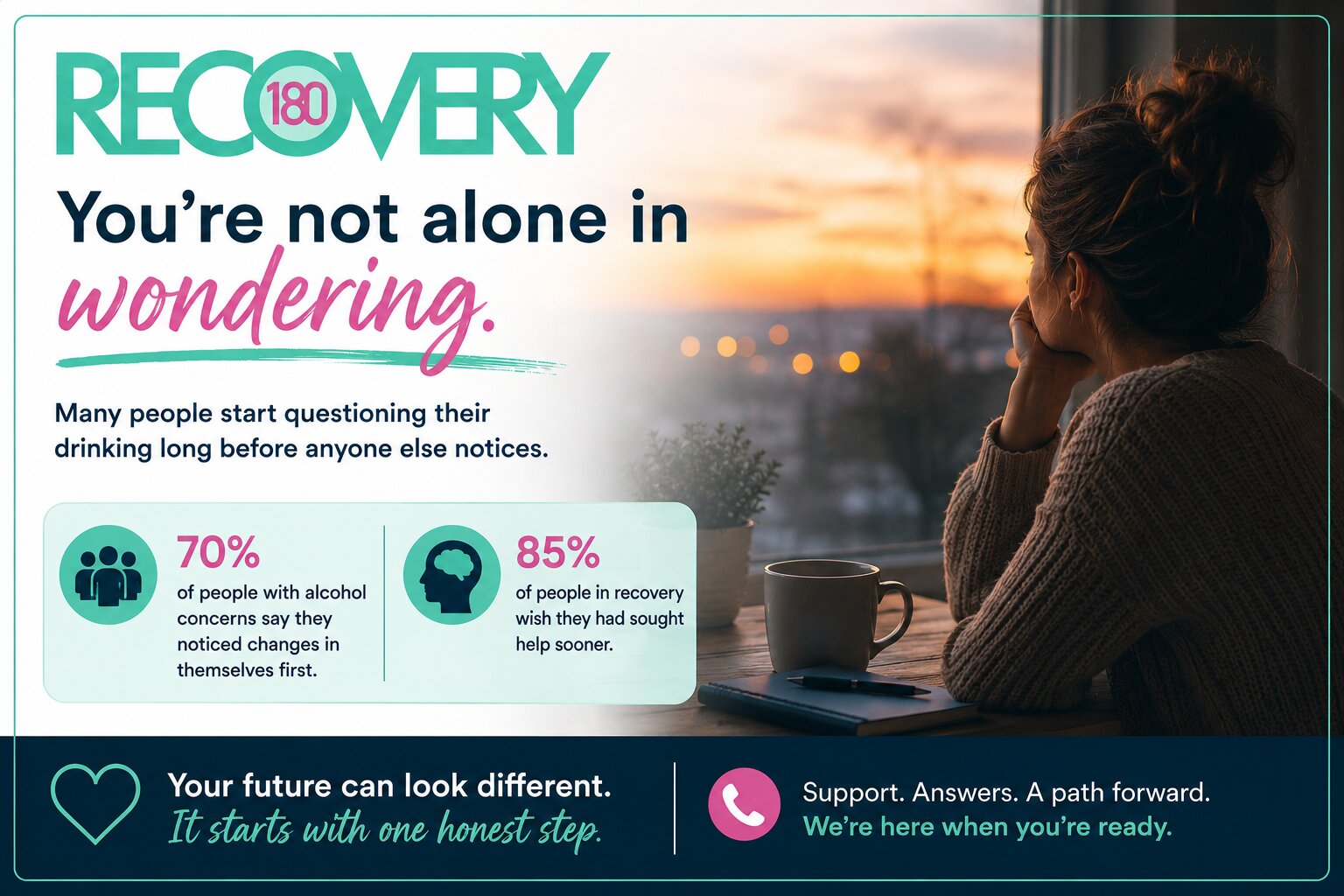
Many people begin questioning their relationship with alcohol long before anyone around them notices a problem. In fact, for many individuals, self-awareness is the first sign that something deserves attention.
If you’re looking for answers, learning about addiction treatment options can help you understand what support may look like if you decide you need it.
The Question Matters More Than You Think
One of the biggest misconceptions about alcohol use is that concern only becomes valid when life starts falling apart.
Many people assume they should only worry if they lose a job, damage a relationship, experience legal trouble, or suffer a serious health consequence.
The reality is often very different.
People frequently start wondering about their drinking while they are still functioning well.
They are going to work.
Paying bills.
Taking care of family responsibilities.
Showing up for obligations.
From the outside, everything may appear normal.
Inside, however, something feels off.
They may notice alcohol taking up more mental space than it used to. They may think about drinking throughout the day or feel anxious when alcohol isn’t available.
Sometimes the concern itself is worth listening to.
Healthy habits rarely cause us to repeatedly question whether they’re becoming unhealthy.
When Drinking Becomes Part of the Formula for Feeling Okay
Many people initially use alcohol for understandable reasons.
Life is stressful.
Work is demanding.
Relationships can be complicated.
Alcohol may seem to provide a temporary pause from all of it.
At first, that pause can feel helpful.
Over time, however, some people notice they aren’t drinking because they want to. They’re drinking because they feel like they need to.
That distinction matters.
Wanting a drink occasionally is different from feeling unable to relax without one.
If alcohol begins to feel like the only reliable way to unwind, fall asleep, socialize, or manage emotions, it may be time to take a closer look at the role it plays in your life.
A useful question to ask yourself is:
“How would I feel if I couldn’t drink tonight?”
Your answer may reveal more than the number of drinks you consume.
Small Changes Often Tell a Bigger Story
Many people expect alcohol concerns to be obvious.
They imagine dramatic situations.
In reality, alcohol-related struggles often develop gradually.
You may notice yourself:
- Drinking more than you originally intended
- Finishing alcohol faster than before
- Needing additional drinks to feel relaxed
- Making promises to cut back and struggling to follow through
- Looking forward to drinking throughout the day
- Feeling irritated when plans interfere with drinking
- Hiding the amount you consume
- Downplaying your drinking when others ask about it
These experiences are often among the earliest signs of drinking problem concerns that people recognize in themselves.
The key isn’t whether one of these applies occasionally.
The question is whether these patterns are becoming more frequent over time.
What Happens When Alcohol Becomes Your Main Coping Tool
Many people don’t realize how much they rely on alcohol until they try not to use it.
When difficult emotions show up, alcohol may become the immediate solution.
Stress?
Drink.
Anxiety?
Drink.
Loneliness?
Drink.
Frustration?
Drink.
Over time, alcohol can begin replacing healthier coping skills instead of complementing them.
The challenge is that alcohol doesn’t actually solve the underlying problem.
It temporarily changes how the problem feels.
Imagine placing a blanket over a warning light in your car. The light disappears from view, but the issue underneath remains.
Alcohol often works the same way.
For a short time, it can make discomfort feel less intense.
Eventually, however, the original stress returns—and often with additional consequences attached.
Your Body May Be Sending Signals Too
The emotional side of drinking often gets the most attention, but physical changes can also provide important clues.
Some people notice:
- Poor sleep quality
- Morning fatigue
- Increased anxiety the next day
- Frequent headaches
- Digestive discomfort
- Difficulty concentrating
- Lower energy levels
- Mood swings
Many people are surprised to learn that alcohol can actually contribute to some of the symptoms they’re trying to escape.
Someone may drink to reduce anxiety in the evening only to wake up feeling more anxious the next morning.
Someone may drink to help with sleep only to experience fragmented, less restorative rest.
This can create a cycle that feels difficult to break.
The Quiet Moment That Changes Everything
There is a moment many people describe when reflecting on their relationship with alcohol.
It’s usually not dramatic.
There are no flashing lights.
No crisis.
No major event.
It’s often a quiet realization.
Maybe you’re pouring another drink and suddenly wonder why.
Maybe you’re counting how much alcohol remains in the house.
Maybe you’re planning tomorrow around when you’ll be able to drink again.
Maybe you’re realizing you’ve been asking the same questions for months.
That moment matters.
Not because it confirms anything.
Because it creates awareness.
And awareness creates choices.
Many people spend years ignoring their concerns.
Others choose to listen.
The people who listen often discover they have more options than they expected.
You Don’t Need Rock Bottom to Ask for Help
One of the most damaging myths about alcohol use is the idea that people should wait until things become severe before reaching out.
You do not have to lose everything to deserve support.
You do not have to prove your struggle.
You do not have to convince anyone that your concerns are serious enough.
Many people seek help because they want to prevent larger problems, not because those problems have already happened.
Early support often allows individuals to make meaningful changes before alcohol creates significant consequences.
Whether that support involves counseling, group support, outpatient care, or a structured treatment plan, reaching out early can provide opportunities that become more difficult later.
For individuals exploring care close to home, options for care in Baltimore, MD and support in Elkridge, MD can offer a place to begin that conversation.
What If You’re Still Unsure?
It’s okay not to have a definitive answer.
Many people spend a long time wondering whether they’re overreacting.
Instead of asking whether your drinking is “bad enough,” try asking different questions:
- Has my drinking increased over time?
- Do I think about alcohol more than I used to?
- Have I tried to cut back unsuccessfully?
- Do I feel uncomfortable when I don’t drink?
- Is alcohol becoming my primary way of coping with stress?
- Am I worried enough to keep searching for answers?
Those questions often reveal more than counting drinks ever could.
You don’t need certainty before seeking information.
You don’t need a diagnosis before having a conversation.
And you don’t need to wait until things get worse before taking yourself seriously.
Sometimes recovery begins long before treatment starts.
It begins the moment someone stops dismissing their concerns and starts listening to them.
Frequently Asked Questions
Is drinking every night automatically a problem?
Not necessarily. However, drinking every night can be worth examining, especially if alcohol feels necessary for relaxation, sleep, or coping with emotions. The frequency of drinking may matter less than the role alcohol plays in your life.
How do I know if I’ve become dependent on alcohol?
Dependence can look different for different people. Some individuals notice cravings, difficulty cutting back, increased tolerance, or feeling uncomfortable when they don’t drink. If alcohol feels increasingly difficult to go without, it may be worth seeking professional guidance.
Can I have a drinking problem even if I’m successful at work?
Yes. Many people maintain careers, relationships, and responsibilities while struggling with alcohol. Functioning well does not automatically mean alcohol isn’t creating challenges behind the scenes.
What if I only drink in the evenings?
Evening-only drinking can still become problematic if it occurs consistently, increases over time, or becomes your primary way of managing stress, anxiety, or emotions.
Should I try to quit on my own?
Some people successfully reduce or stop drinking independently. Others benefit from professional support. The safest approach depends on factors such as how much you drink, how long you’ve been drinking, and whether withdrawal symptoms may be a concern.
When should I consider professional help?
Consider reaching out if you’ve tried to cut back unsuccessfully, feel concerned about your drinking, notice negative consequences, or find yourself thinking about alcohol more often than you’d like. You don’t need to wait for a crisis before seeking support.
If you’re wondering whether your nightly drinking has become something more, you don’t have to figure it out alone. Call (410) 584-3155 or visit our addiction treatment services to learn more about our addiction treatment services Baltimore, Maryland.